Connect with us

Business

BREAKING: Vessels supplied in Singapore yet to report engine issues due to contaminated bunkers, following Houston VLSFO case

MPA has reached out to VPS to obtain information on two vessels reported to have taken contaminated bunker fuel in Singapore; the port authority is investigating the matter, it tells Manifold Times.

Admin

Published

on

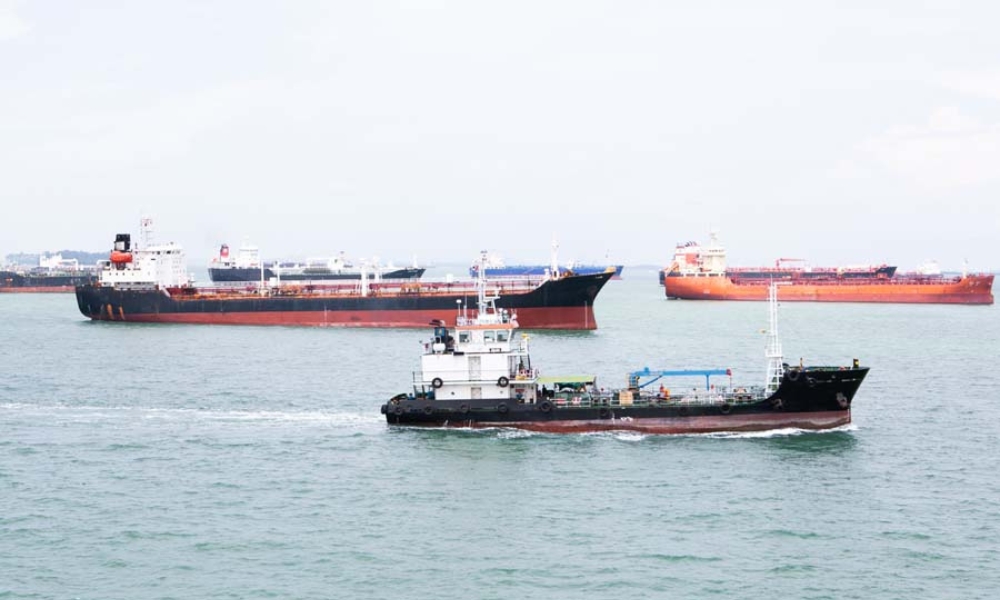
RESIZED bunker tanker singapore

The Maritime and Port Authority of Singapore (MPA) on Saturday (12 August) said it has not received reports of vessels experiencing engine issues from contaminated bunker fuel supplied in Singapore to date.

MPA said this in response to questions from Singapore-based bunkering publication Manifold Times, relating to the VLSFO marine fuel contamination case in Houston. 

Marine fuel testing firm VPS previously revealed out of 14 vessels affected by the issue, two vessels were supplied with contaminated fuel oil in Singapore and 12 vessels received it in Houston. 

“MPA has reached out to VPS to obtain information on the two vessels which they had reported to have taken contaminated fuel in Singapore, including the test results of the fuel supplied to these vessels. MPA is investigating the matter,” the port authority told Manifold Times

“To date, MPA has not received reports of vessels experiencing engine-related problems due to contaminated fuel supplied in Singapore, such as the presence of Dicyclopentadiene, in 2023.”

On 10 July, VPS informed its customers and the wider market, of the presence of Dicyclopentadiene (DCPD) isomers at significantly high levels within VLSFO bunker fuel deliveries in Houston. The contaminants were detected using in-house GC-MS (Gas Chromatography – Mass Spectrometer) analytical methodologies.

Initially, VPS highlighted eleven vessels had suffered operational issues, such as loss of power and propulsion whilst at sea. These effects resulted from fuel leakage in the ICU (Injection Control Unit) units and fuel pumps not being able to develop the required fuel pressure, affecting only the Auxilary engines and not Main engines. The contaminated VLSFO had been delivered in Houston, by one single fuel supplier.

Four weeks later, VPS provided a further update on the spread of this fuel contamination issue: Fourteen vessels in total, received this contaminated fuel and suffered some form of damage to their auxiliary engines and fuel delivery systems. Twelve of the vessels received their fuel in Houston, whilst a further two vessels received their fuel in Singapore, with the fuel delivered by four suppliers.

Lloyd’s Register Fuel Oil Bunkering Analysis and Advisory Service (FOBAS) also highlighted it dealt with a number of problematic VLSFO RM fuels from the US Gulf region, specifically from Houston and New Orleans. During the use of these fuels vessels have reported varying degrees of problems with the fuel injection equipment, which in a couple of cases has resulted in total loss of power.

Related: VPS: Houston contaminated VLSFO bunker fuel was also supplied in Singapore
Related: VPS identifies new bunker fuel contamination at Houston
Related: FOBAS: Possible bunker fuel contamination in Houston and US Gulf area
Related: Viswa Group gives update on bunker fuel issues in Houston
Related: FuelTrust analysis finds fuel content discrepancies in 39% of global bunker deliveries


Photo credit: Manifold Times
Published: 12 August, 2023

Continue Reading

LNG Bunkering

LR awards AiP to CSSC Huangpu Wenchong for 12,500 m³ LNG bunker vessel design

Vessel design incorporates Type C LNG cargo tanks and has been evaluated against a range of class notations covering gas operations, automation, environmental performance and cyber resilience.
Admin

Published

on

By

33

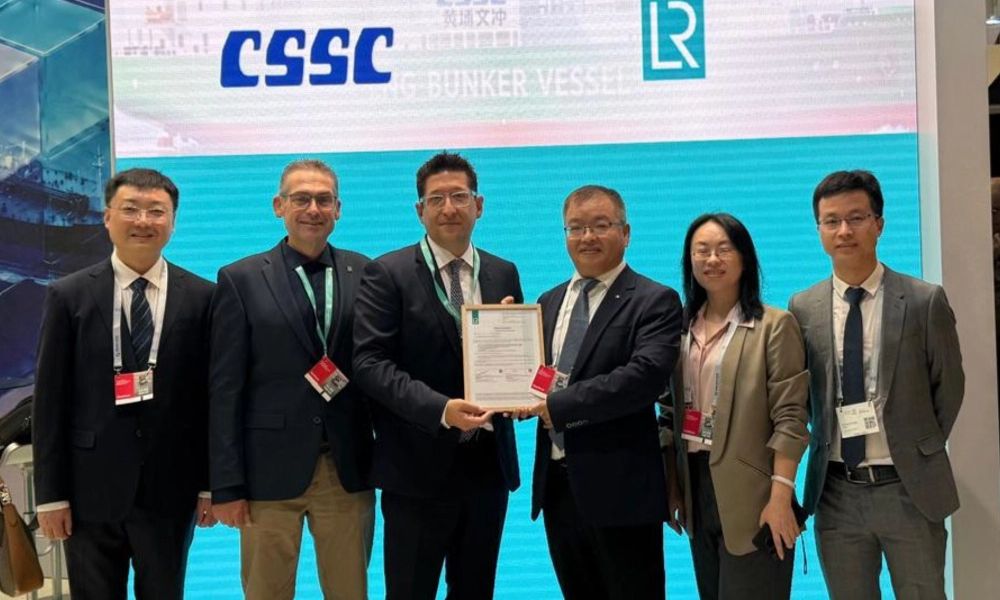
Classification society Lloyd’s Register (LR) on Thursday (3 September) said it has awarded Approval in Principle (AiP) to CSSC Huangpu Wenchong Shipbuilding Co., Ltd. for a new 12,500 m³ LNG bunkering vessel design.

The AiP was signed at SMM 2026 in Hamburg and confirms that the vessel concept has successfully completed an independent design assessment against LR’s latest classification requirements.

The new 12,500 m³ vessel design incorporates Type C LNG cargo tanks and has been evaluated against a comprehensive range of class notations covering gas operations, automation, environmental performance and cyber resilience.

LR’s assessment was carried out in accordance with its Rules and Regulations for the Classification of Ships and Rules and Regulations for the Construction and Classification of Ships for the Carriage of Liquefied Gas in Bulk.

Constantinos Chaelis, LR’s Global Gas Segment Director, said: “This project demonstrates the continued market confidence in LNG and the importance of building the supporting infrastructure that enables owners to make practical emissions reductions today, while maintaining flexibility for the future. Through early engagement between shipyard and class, we can accelerate the delivery of robust designs that meet both operational and regulatory requirements.”

A Huangpu Wenchong spokesperson, said: “This Approval in Principle from Lloyd’s Register validates the technical approach and provides a strong foundation for future development. We believe vessels of this type will play an increasingly important role in supporting the energy transition by helping ensure LNG is available where shipowners need it most.”


Photo credit: Lloyd’s Register
Published: 7 September, 2026

Continue Reading

Alternative Fuels

DNV at SMM: Chinese shipbuilders, European owners seek closer ties on alternative bunker fuels

Chinese shipbuilders and European shipowners called for closer collaboration on vessel development, alternative fuels and digitalization during the inaugural China-Europe Maritime Summit at SMM 2026.
Admin

Published

on

By

32 1

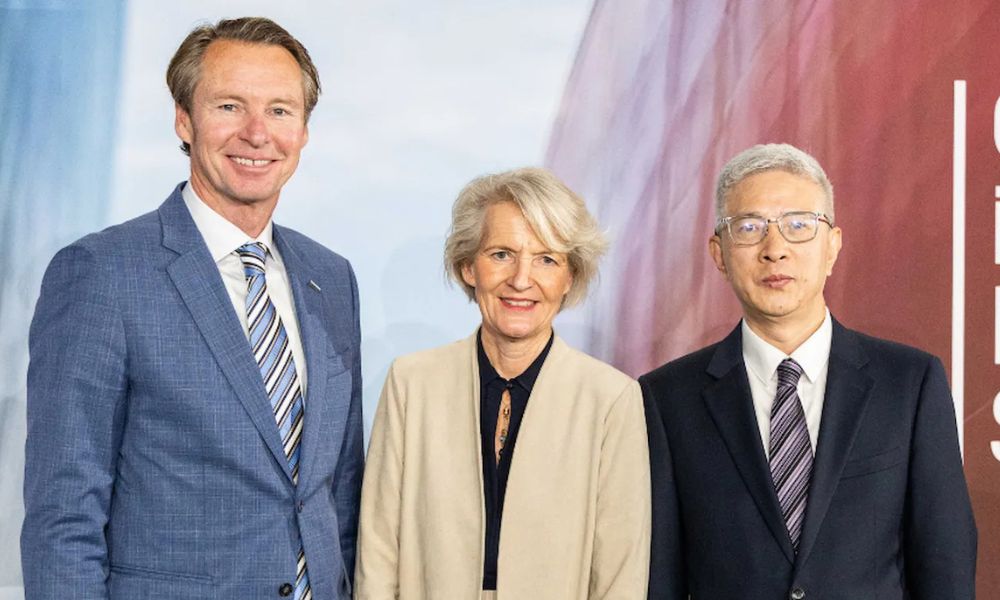
Chinese shipbuilders and European shipowners called for closer collaboration on vessel development, alternative fuels and digitalization during the inaugural China-Europe Maritime Summit at SMM 2026, according to classification society DNV on Friday (4 September). 

The summit, jointly organized by the China Association of the National Shipbuilding Industry (CANSI), the German Shipowners’ Association (VDR) and DNV, brought together leaders from two maritime sectors that collectively shape a significant share of the global fleet. 

Energy efficiency, operational flexibility and digital innovation were highlighted as key areas for the industry as it navigates decarbonization targets, evolving regulation and uncertainty around future fuel pathways.

Knut Ørbeck-Nilssen, Group President and CEO at DNV, said: “Gathering leaders from across Chinese shipbuilding, European shipping and the wider maritime value chain in one room is both timely and important. The decisions being made across our industry today will shape shipping for decades to come, and this summit demonstrates a shared commitment to shaping the future of our industry together.”

Xu Peng, Chairman of China State Shipbuilding Corporation (CSSC), said: “China and Europe’s maritime sectors share aligned missions, complementary strengths and promising prospects. This summit can serve as a starting point for deeper cooperation between China’s shipbuilding industry and Europe’s shipping community, and help broaden the boundaries of full‑chain collaboration and build an interconnected ecosystem.”

Dr. Gaby Bornheim, President of the German Shipowners’ Association (VDR), said: “For shipowners, a new vessel is never an investment for the next quarter. It is a commitment for decades. Long-term investments require trusted partnerships, and many of the world’s most advanced commercial vessels are the result of cooperation between European shipowners and Chinese shipbuilders. Excellence is rarely achieved in isolation.”

China’s shipbuilding industry accounts for around 70% of the global orderbook, while European shipowners operate more than one-third of the world’s fleet capacity. As the global shipping industry faces increased uncertainty, finding solutions that provide flexibility is essential. 

The summit featured two high-level panel discussions moderated by Dr. Martin Kröger, CEO of VDR, and Li Yanqing, Vice Chairman and Secretary General of CANSI, bringing together senior executives from leading Chinese shipbuilders, including China Merchants Industry (CMI), Guangzhou Shipyard International (GSI), Shanghai Waigaoqiao Shipbuilding (SWS), and Shanghai Merchant Ship Design & Research Institute (SDARI), alongside European shipowners and operators such as Vogemann Reederei, Briese Schiffahrt, Bernhard Schulte, MPC Containerships, and Grieg Edge, as well as DNV. 

Discussions further highlighted the importance of close China-Europe collaboration to support shipping’s transformation.


Photo credit: DNV
Published: 7 September, 2026

Continue Reading

Alternative Fuels

Auramarine: Marine fuel flexibility will be key to shipping’s energy transition

Operators who adapt best will be the ones who built in the flexibility to their marine fuel strategy to respond as conditions change, says CEO John Bergman.
Admin

Published

on

By

31 1

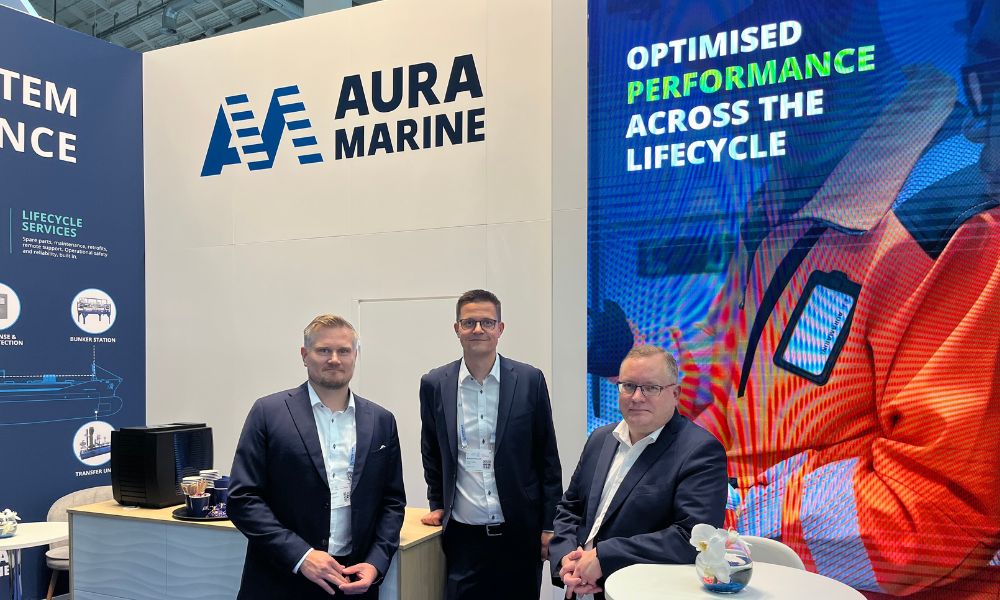
Finland-based fuel supply systems provider Auramarine on Wednesday (2 September) said it believes shipping’s energy transition is entering a phase where flexibility, not fuel choice, will determine which operators adapt successfully. 

With fuel price volatility, inconsistent alternative availability and tightening environmental regulation at different speeds across regions, Auramarine argued that the right approach to fuel supply infrastructure is now as strategically important as the fuel itself.

“The industry has spent years asking which fuel will win,” said John Bergman, CEO, Auramarine. 

“That may be the wrong question. No operator today can predict with confidence what will be available, compliant or commercially viable in five years. The operators who adapt best will be the ones who built in the flexibility to their fuel strategy to respond as conditions change.”

Auramarine’s own fuel split technology, first delivered in 2019 and now installed on around 20 vessels, reflects this thinking in practice. The retrofit system adds a fuel booster module onboard, allowing a ship to run different fuels through the same engine without the extended changeover procedures dual-fuel systems typically require.

This lets operators switch to MGO or biofuel, for example, to meet an ECA requirement, support maintenance schedules, or respond to fuel pricing shifts, without taking a vessel out of service. Delivered in sections through existing doors and hatches, it can be retrofitted to vessels already in operation.

Bergman sees this need for adaptability sharpening in sectors under the most operational and regulatory pressure. 

“Cruise and ferry operators feel this earliest and most acutely,” he said. 

“These vessels constantly move between regulatory zones and environmentally sensitive waters, so the ability to switch fuel supply without disrupting a schedule is an operational necessity. What’s notable is how many operators in this space still don’t know infrastructure like this exists, despite how directly it addresses what they’re already dealing with.”

Reliable flexibility requires a tailored approach, not just adding equipment. “The best results come from scoping flexibility to an owner’s actual fuel strategy, not adding complexity for its own sake,” Bergman added. 

Automated fuel changeover systems are designed to keep multi-fuel operations straightforward for crews, while a structured maintenance approach ensures inspection, testing and servicing can be carried out safely throughout the vessel’s lifecycle. This is where Auramarine’s lifecycle services play a central role, supporting operators well beyond initial installation with the ongoing servicing, spares and technical support needed to keep flexible fuel systems performing reliably for the long term, whatever the fuel landscape looks like in years to come.

“Over the next few years, operators who succeed will be the ones who stopped waiting for certainty and started building optionality instead,” Bergman added

“In a transition this uncertain, adaptability matters more than any single fuel bet. That’s the conversation we want the industry to have.”


Photo credit: Auramarine
Published: 7 September, 2026

Continue Reading
Advertisement

OUR INDUSTRY PARTNERS


Trending