Connect with us

Business

‘BunkerPlanner’ is now available in Asia, says BunkerMetric Co-founder

The bunker procurement optimisation tool will be marketed in the Asia Pacific region, by Ben Line Agencies.

Admin

Published

on

5dae6d66aadd1 1571712358

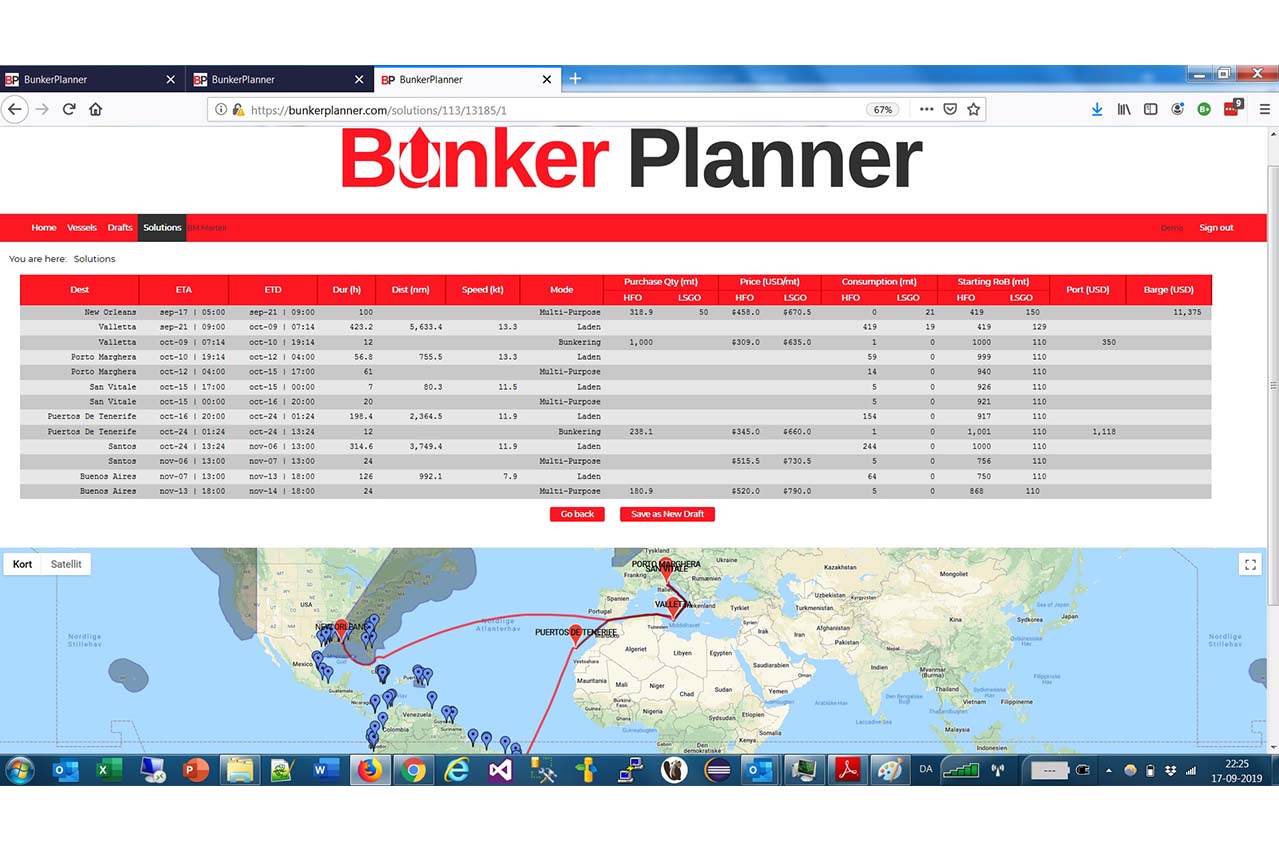
BunkerPlanner, a bunker procurement optimisation tool developed by Scandinavian maritime technology firm BunkerMetric, will now be available in the Asia Pacific region, says its Co-founder.

The tool helps marine fuel buyers choose the right port, volume and grade of marine fuel for bunkering in the cheapest way possible while considering Emission Control Areas (ECAs), scrubbers, tank configurations and other vessel operational issues.

“We have a value-generating product that can help many Asian bunker buyers, especially for small and medium sized tramp operators, save 1% to 3% in total bunker cost,” Christian Plum told Manifold Times.

“Compared to others, we provide unbiased advice as we are not affiliated with any local or global commodity traders.

“We have the most advanced algorithms that consider all commercial, operational, and regulatory aspects of bunker buying.”

IMO 2020 has influenced the marine fuels buying sector where players are now seeing a more diverse and increasingly volatile bunker market, according to Plum.

“That means that bunker desks cannot buy bunkers using the rules of thumb or continue doing what we did yesterday,” he explains.

“We need to be advanced all the time to adapt to how the market and regulatory changes. This is why we believe bunker buyers will need to be supported by data algorithms to make the decisions.

“There will be so much turmoil and we need a simple interface to help calculate and select from amongst a complex array of procurement options.”

BunkerPlanner will be marketed in Asia by Ben Line Agencies. Contact details for a product test of BunkerPlanner are as follows:

Name: Edward Barry
Direct: +65 6420 9186
Mobile: +65 9739 3789
Email: [email protected]

Photo credit: Bunker Metric
Published: 22 October, 2019


Continue Reading

Alternative Fuels

Singapore-based Golden Island, Qingdao Port team up on alternative bunker fuels

Agreement covers green methanol, green ammonia and bio-LNG, with cooperation spanning fuel production and transportation through to storage, sales and bunkering.
Admin

Published

on

By

Golden Island, Qingdao Port team up on green methanol, ammonia and bio-LNG

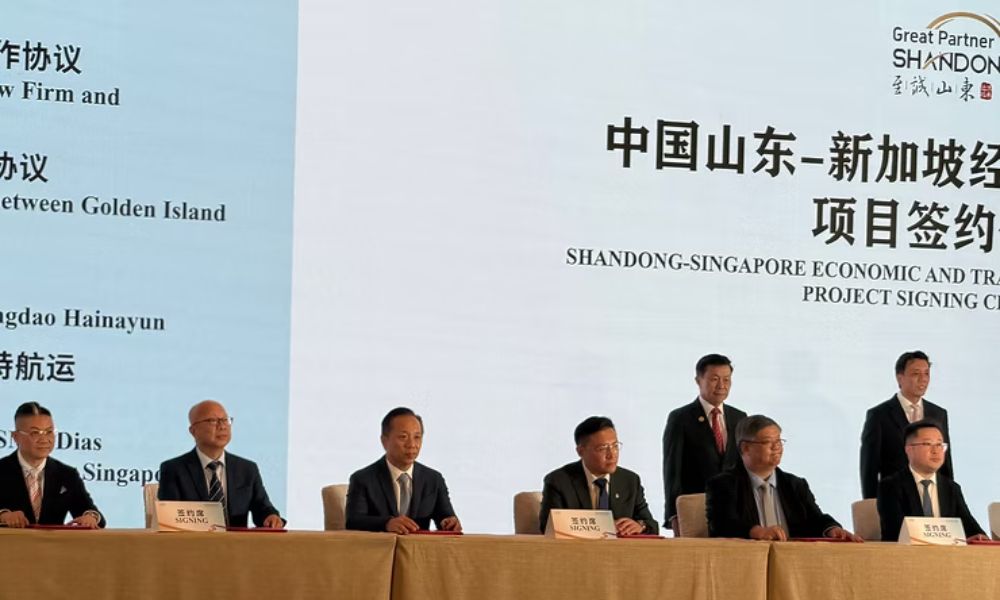
Singapore bunker supplier Golden Island Pte Ltd on Monday (21 September) said it has signed a strategic framework agreement with Qingdao Port International Co Ltd to collaborate on the supply of alternative marine fuels.

The agreement covers green methanol, green ammonia and bio-LNG, with cooperation spanning fuel production and transportation through to storage, sales and bunkering.

“By combining our MPA-licensed bunkering capabilities with Qingdao Port’s incredible logistics and strategic hub position, we are building something truly robust for the global shipping industry’s low-carbon future,” the company said in a statement. 

Qingdao Port International, which operates five major port areas in China, will bring its logistics network, storage facilities and customs clearance capabilities to the partnership.

Golden Island is licensed by the Maritime and Port Authority of Singapore (MPA) to conduct methanol bunkering and is ISCC EU-certified.

The companies are also engaging with container liners, bulk carriers, oil tankers and cruise ships regarding the adoption of alternative marine fuels.


Photo credit: Golden Island Pte Ltd
Published: 22 September, 2026

Continue Reading

Ammonia

HD HHI and HD KSOE secure ABS AiP for ammonia bunkering vessel design

ABS awarded approval in principle for the basic design of a 22,000 CBM bunkering vessel capable of supplying ammonia as marine fuel.
Admin

Published

on

By

HD HHI and HD KSOE secure ABS AiP for ammonia bunkering vessel

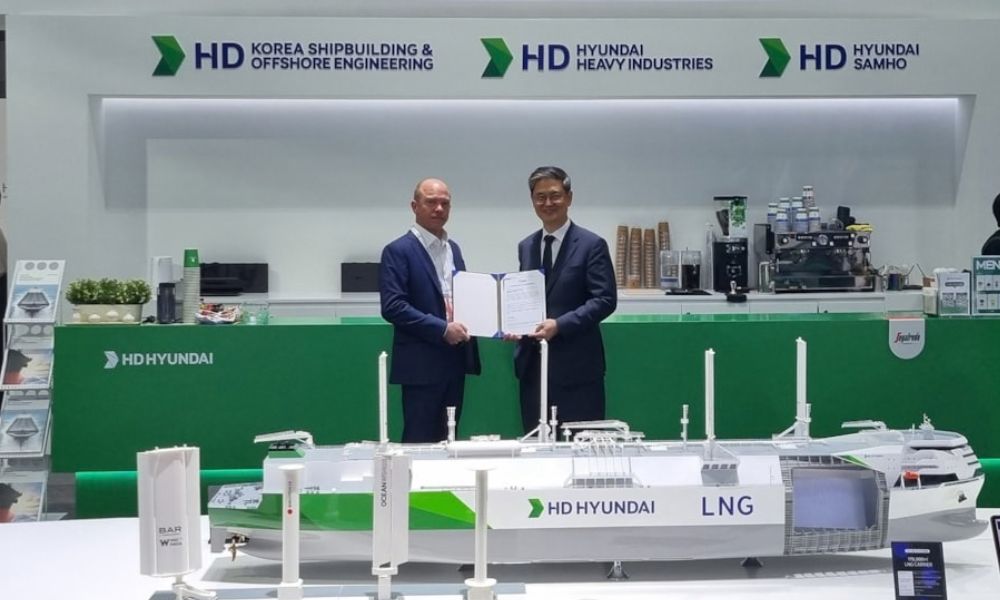
Classification society ABS on Monday (21 September) said it has awarded HD Hyundai Heavy Industries (HD HHI) and HD Korea Shipbuilding & Offshore Engineering (HD KSOE) approval in principle (AIP) for the basic design of a 22,000 CBM bunkering vessel capable of supplying ammonia as marine fuel.

The approval is the result of a joint development project initiated earlier this year. ABS reviewed the design’s general arrangement, machinery arrangement, ammonia cargo handling system and fuel supply system against applicable class and international requirements.

Gareth Burton, ABS Senior Vice President, Global Engineering, said: “Bunkering infrastructure is a critical step for any marine fuel to scale, and it has to be implemented with safety designed in from the start.

“This AIP reflects the industry’s need for fuel flexibility while advancing the safe bunkering of ammonia. ABS is proud to support HD HHI and HD KSOE as they develop technologies that expand fuel flexibility.”

Ryu Hong-Ryeul, Chief Technical Officer (CTO) of HD HHI, said: “As ammonia rapidly emerges as a viable low-carbon alternative fuel, demand for ammonia bunkering vessels is expected to grow in line with the increasing adoption of ammonia-fuelled ships. 

“This AIP marks a significant milestone toward the commercialisation of ammonia bunkering vessels.”

ABS and the HD Hyundai group have worked together across a range of technologies supporting ammonia as a marine fuel. Recent projects have included AIP for HD KSOE’s ammonia cargo handling and bunkering system and initial review for HD HHI’s machinery arrangement in engine room.


Photo credit: ABS
Published: 22 September, 2026

Continue Reading

Alternative Fuels

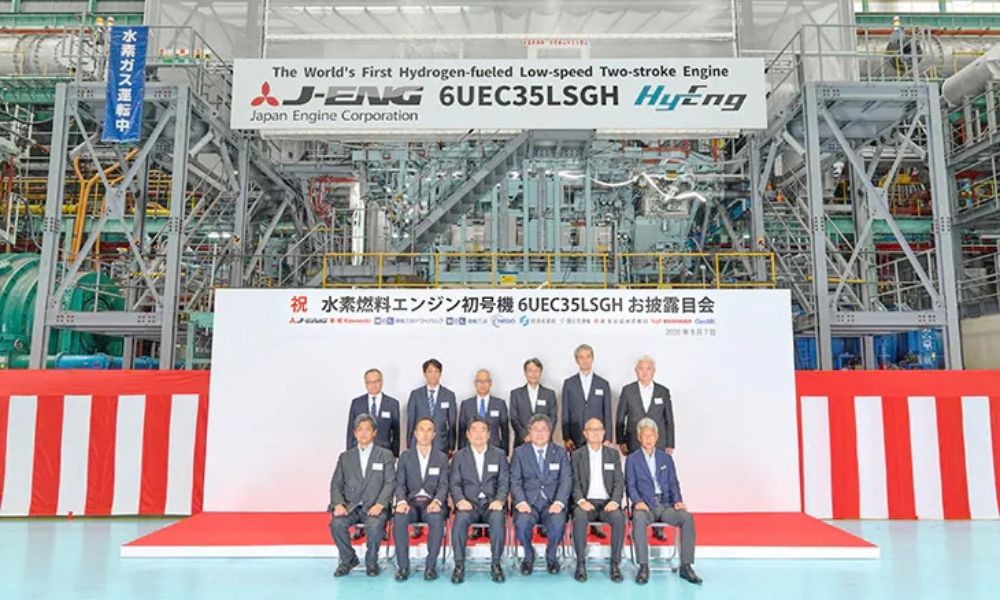
J-ENG completes land-based testing of hydrogen-fuelled marine engine

Engine will be installed on a 17,500 DWT multipurpose vessel to be built by Onomichi Dockyard for MOL and MOL Drybulk, with onboard demonstration testing scheduled to begin in April 2028.
Admin

Published

on

By

12 2

Japan Engine Corporation (J-ENG) on Friday (18 September) said it has completed land-based testing of the world’s first hydrogen-fuelled engine for large commercial vessels, the 6UEC35LSGH.

During factory testing, the engine achieved a hydrogen co-firing rate of at least 95%, reducing GHG emissions by more than 95% compared with conventional heavy-fuel-oil engines.

By adopting a high-pressure direct injection system, which injects fuel directly into the cylinder at high pressure, J-ENG said the engine achieves stable hydrogen combustion. 

Safety measures were also implemented, including a robust structure to prevent hydrogen leakage and double-walled piping for hydrogen supply lines. 

“Approval testing was conducted in the presence of ClassNK and was completed successfully,” the company said. 

The engine will be installed on a 17,500 DWT multipurpose vessel to be built by Onomichi Dockyard for Mitsui O.S.K. Lines and MOL Drybulk.

Hydrogen fuel will be supplied to the engine through a marine hydrogen fuel system, consisting of marine hydrogen fuel tanks and a fuel supply system, developed and manufactured by Kawasaki Heavy Industries.

In addition, Nippon Kaiji Kyokai (ClassNK) will conduct safety assessments throughout each stage of the engine’s development and the vessel’s design, construction and operation.

The vessel will then undergo sea trials before onboard demonstration testing begins in April 2028. 

Kawasaki will also develop and manufacture bunkering equipment for supplying liquefied hydrogen to vessels. 

“The demonstration will further evaluate the engine’s durability and performance under actual operating conditions,” J-ENG added.


Photo credit: J-ENG
Published: 22 September, 2026

Continue Reading

Trending