Connect with us

Business

Clean Shipping Coalition: UN shipping agency climate talks again held back by handful of blockers

Science is clear: governments must urgently act to halve shipping emissions by 2030 to keep the 1.5° safe warming limit within reach.

Admin

Published

on

IMO other

The Clean Shipping Coalition on Friday (26 November) released a statement regarding the outcome of IMO’s MEPC 77 session:

  • Despite widespread support for keeping warming below 1.5 degrees and for ending ship climate emissions by 2050, IMO fails to agree new goal.
  • Russia, Saudi Arabia, UAE, China, and Argentina thwart 100+ country consensus in favour of aligning shipping with Paris Agreement goals.
  • A majority of countries favour a basket of mid-term measures to tackle emissions – including both a carbon levy and a fuel standard, with talks resuming in 2022.

The outcome of the climate talks at the UN’s shipping agency, the International Maritime Organization (IMO), is yet another blow to any efforts to start reducing greenhouse gas (GHG) emissions from ocean shipping, and to align the sector with the temperature goals of the Paris Agreement. 

Even though most of the 175 IMO member states have publicly supported the need for zero emissions of carbon neutral shipping by 2050 (compared to the current target of only halving emissions by 2050) there was not majority support at MEPC77 to adopt the Pacific Islands resolution along these lines – with Brazil, Russia, China, and others opposing the proposal and the EU27, Norway preferring instead to raise ambition only when the initial GHG Strategy is reviewed in two years’ time.

The proposal came only two weeks after the COP26 Climate Summit in Glasgow, which saw broad support for urgent decarbonisation of the sector. Science is clear: governments must urgently act to halve shipping emissions by 2030 to keep the 1.5° safe warming limit within reach.

We welcome the support of more countries for a “zero emissions” by 2050 goal, versus a smaller group of countries in favour of “net zero” by 2050 (MEPC 77/J/5/Rev.2, paragraph 7.4). This confirms the approach of the Initial Strategy, that false solutions like “carbon offsets” are not accepted at IMO, and that the goal is firmly in-sector decarbonisation.

John Maggs, Clean Shipping Coalition, said: “Ambition at the IMO has again been held hostage by a small group of countries hell bent on rendering the organisation impotent on the most pressing issue of our age. There was a clear and substantial majority in the room for greater climate ambition but Russia, Saudi Arabia and others ensured that the IMO again failed to move the dial on ship climate action. With every delay the scale of the task gets greater, and ship emissions must halve by 2030 if we are to save 1.5 degrees.”

Faig Abbasov, Transport & Environment, said: “When it comes to mandatory measures on green shipping fuels, the can has been kicked down the road to 2022 without any commitment to speed up their adoption. IMO negotiations are like a soap-opera. Whenever you think that the momentum for action is ripe, you then realise that there are still many seasons before a final decision is taken.”

Lucy Gilliam, Seas at Risk, said: “Those stopping action on climate at IMO are also stopping the organization from dealing with many other important environmental issues. The blockers have caused dangerous delays to almost every item on the agenda. After 2 years of deferrals, the urgent topic of plastic pollution from shipping was given barely an hour for discussion with every item deferred to the following year. The problem here is a systemic one.” 

Background information:

The IMO’s 77th Marine Protection Committee session (MEPC77) met virtually and in person on November 22-26 to discuss the revision of the current greenhouse gas target for 2050 to align with the Paris Agreement’s goals as well as mid-term measures to reduce emissions.

  • On revising the 2050 emissions target: IMO member states did not reach an agreement on revising the IMO’s current target and on committing to reducing shipping emissions to zero by 2050. They failed to show sufficient support for the proposed resolution for zero shipping emissions by 2050 put forward by the Marshall and Solomon Islands, despite the broad support for the target. The resolution would have gone through if EU countries had supported it. Further revision of the target will not take place until 2023.
  • Countries supporting the zero by 2050 target: EU27, Georgia, Norway, Republic of Korea, Bahamas and Kenya
  • Countries opposed to this: Brazil, China, Russia, Saudi Arabia, the United Arab Emirates, Venezuela, Paraguay, Nigeria, South Africa, Ecuador, Argentina, Chile, and Iran.
  • On mid-term measures to reduce emissions: IMO member states moved forward all proposals for mid-term measures to the ISWG-GHG 12 meeting in 2022. A clear preference was given to market-based measures, including a carbon levy, and to a fuel standard. 
  • Countries in favour of a carbon levy (in particular or as part of a basket of measures) and/or a fuel standard included: the EU27, Canada, Japan, Liberia and Pacific Islands countries
  • Countries opposing a carbon levy and/or a fuel standard included: Saudi Arabia, Brazil, Argentina, China, Chile, South Africa and Russia 

Key facts on shipping:

  • Around 90% of all traded goods are transported across oceans on cargo vessels, with a vast majority powered by fossil fuels such as heavy fuel oil.
  • The UN estimates that shipping currently accounts for 3% of all global greenhouse gas emissions. Scientists warn that by 2050  this could well represent up to 10% of all emissions.
  • The sector must halve its emissions before 2030 and emit absolute zero emissions by 2050 at the very latest to have a good chance of limiting global heating to 1.5 degrees.
  • The sector also produces up to 15% of the world’s manufactured sulfur oxide and nitrous oxide emissions, which disproportionately impact low income communities of color living near ports. 
  • As a result, shipping emissions are linked to an estimated 6.4 million global childhood asthma cases and 260,000 premature deaths annually. 

Related: INTERCARGO supports IMO’s MEPC 77 shipping decarbonisation goals by 2050
Related: INTERCARGO: Global challenges require global solutions to achieve zero-emission shipping by 2050
Related: Royal Belgian Shipowners’ Association: MEPC 77 needs to deliver concrete actions
Related: IBIA: ECGS guidelines and discharge policy on MEPC 77 agenda
Related: IBIA: MEPC 77 to discuss mandatory flashpoint on the BDN
Related: MEPC 77: Governments to decide on ICS USD 5 billion R&D fund to accelerate decarbonisation goals
Related: MEPC 77: IMO must rapidly cut emissions of black carbon from shipping, says Clean Arctic Alliance
Related: IMO schedules remote session of Marine Environment Protection Committee (MEPC 77)


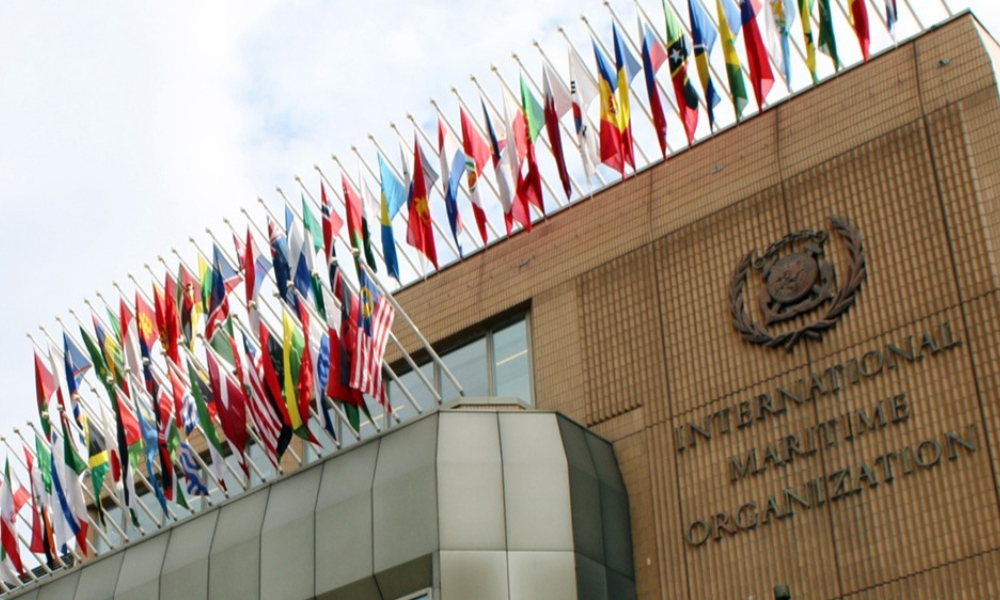
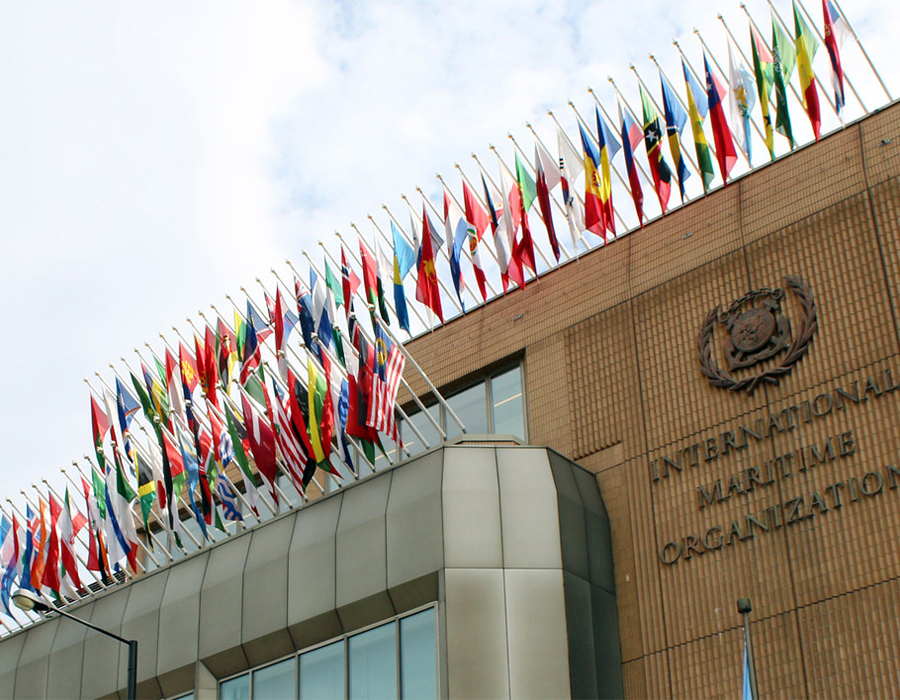
Photo credit: International Maritime Organization
Published: 29 November, 2021

Continue Reading

Winding up

Singapore: High Court to hear Norvic Shipping Asia winding up application on 31 July

Application for the winding up of Norvic Shipping Asia Pte Ltd was filed by Netherlands-registered Mur Shipping BV on 8 April, according to Government Gazette notice.

Admin

Published

on

By

RESIZED singapore high court

An application for the winding up of Norvic Shipping Asia Pte Ltd was filed by Netherlands-registered Mur Shipping BV on 8 April, according to a Tuesday (21 July) notice on the Government Gazette.

It noted the winding up application is directed to be heard before the Judge sitting in the General Division of the High Court at 10am on 31 July.

Any creditor or contributory of the company desiring to support or oppose the making of an order on the winding up application may appear at the time of hearing by himself or his counsel for that purpose.

A copy of the winding up application will be furnished to any creditor or contributory of the company requiring the copy of the winding up application by the solicitors of the applicant’s, Oon & Bazul LLC, on payment of the regulated charge for the same.

The Applicant’s address is Hiridostraat 5, Gebouw Prismatrium, 1101CW Amsterdam, The Netherlands.

The Applicant’s solicitors are Oon & Bazul LLC of 103 Penang Rd, #04-04/05/06 Singapore 238467. 

Queries on the winding up application may be directed to the following email addresses: [email protected] and [email protected].


Photo credit: Manifold Times
Published: 22 July, 2026

Continue Reading

Methanol

World Fuel and partners complete first green methanol bunkering of car carrier in Shanghai

Operation involved the delivery of approximately 2,800 MT of green methanol to “Arctic Tern” via a ship-to-ship transfer using SIPG Energy’s dedicated methanol bunkering vessel “M/V Hai Gang Zhi Yuan”.

Admin

Published

on

By

World Fuel and partners complete first green methanol bunkering of car carrier in Shanghai

Marine fuel provider World Fuel on Tuesday (21 July) said it successfully completed the first green methanol bunkering of M/V Arctic Tern, with EUKOR Car Carriers and SIPG Energy at the Port of Shanghai. 

Arctic Tern is the first vessel in the new Shaper Class series of car carriers. 

The operation involved the delivery of approximately 2,800 MT of green methanol to Arctic Tern via a ship-to-ship transfer using SIPG Energy’s dedicated methanol bunkering vessel M/V Hai Gang Zhi Yuan, the largest vessel of its kind in operation. 

The bunkering operation was carried out at Haitong Terminal, Waigaoqiao Port Area, Shanghai Port, with cargo handling operations conducted simultaneously during bunkering.

This marks EUKOR Car Carriers’ first green methanol operation and the first time Arctic Tern has bunkered methanol since its delivery on 9 July. The operation marked the first bunkering at Shanghai Port of green methanol produced locally in Shanghai for an international PCTC operator. 

It also demonstrated the city’s integrated green methanol value chain, spanning local production, storage and bunkering, and established a replicable “Shanghai Model” for green methanol supply.

World Fuel arranged the supply and delivery of the fuel on behalf of EUKOR Car Carriers, working with SIPG Energy as the physical supplier at the Port of Shanghai.

The green methanol supplied was produced from municipal solid waste, ISCC-EU certified, and had a carbon intensity value below 25 gCO₂e/MJ.

Arctic Tern is the first of fourteen Shaper Class vessels ordered by Wallenius Wilhelmsen. With a capacity of 9,300 car equivalent units and methanol dual-fuel capability, the vessel will be operated by EUKOR Car Carriers, jointly owned by Wallenius Wilhelmsen and Hyundai Motor Group. Following her first green methanol bunkering, Arctic Tern will continue her maiden voyage from Asia to Europe.

Xavier Leroi, COO Shipping Services at Wallenius Wilhelmsen and CEO of EUKOR Car Carriers, said: “Completing Arctic Tern’s first green methanol bunkering shortly after delivery is a significant milestone towards our decarbonisation ambition for both EUKOR Car Carriers and Wallenius Wilhelmsen. It demonstrates how investments in next-generation vessel technology and fuel flexibility are being translated into real-world operations. 

“This achievement reflects the strong collaboration between all parties involved. Together, we have shown how partnerships across the maritime value chain can help make lower-emission fuels available and operationally viable at scale.”

Mark Tamsitt, SVP Global Marine Sales at World Fuel, said, “The first bunkering event with a new fuel is a significant moment for any shipowner, and our role is to make it as seamless as possible. By connecting EUKOR Car Carriers with SIPG Energy’s proven green methanol capability at the Port of Shanghai, we were able to deliver on reliable supply, fuel quality, and safe processes. As more of our customers bring methanol dual-fuel tonnage into service, we are committed to being the partner that makes these kinds of operations routine.”

Mr. Zhang Da, General Manager of SIPG Energy, said, “Welcoming Arctic Tern to the Port of Shanghai for her first green methanol bunkering demonstrates the strength and maturity of our supply capability. Building on our well-established methanol ship-to-ship bunkering services for container vessels, we have already extended such services to pure car and truck carriers (PCTCs). This bunkering sets a new record for the largest single SIMOPs green methanol bunkering for PCTCs in China, marking another step in building Shanghai’s position as a global green energy hub for international shipping.”

This operation follows Wallenius Wilhelmsen’s announcement on 9 July that Arctic Tern would complete her first methanol bunkering shortly after delivery. The vessel entered service on routes between Asia and Europe immediately following handover from China Merchants Jinling Shipyard in Nanjing.


Photo credit: World Fuel
Published: 22 July, 2026

Continue Reading

Ammonia

HPA and MB Energy develop safety concept for STS ammonia bunkering

HPA says the Port of Hamburg will become “bunker ready” for ammonia, laying the groundwork for safe and reliable ammonia bunkering in the future.

Admin

Published

on

By

HPA and MB Energy develop safety concept for STS ammonia bunkering

The Hamburg Port Authority (HPA) and integrated energy company MB Energy on Tuesday (21 July) said they have completed a comprehensive risk analysis and developed a dedicated safety concept for ship-to-ship ammonia bunkering.

MB Energy said the analysis lays the groundwork for the safe introduction of ammonia as a future marine fuel.

“With our planned ammonia import terminal in Hamburg-Blumensand, MB Energy intends to provide the reliable land side supply infrastructure needed to support this transition across northern German ports,” it said in a social media post. 

Mabanaft Group was renamed to MB Energy last year and merged over 50 existing brands under one identity. 

Separately, HPA said the Port of Hamburg will become “bunker ready” for ammonia, laying the groundwork for safe and reliable ammonia bunkering in the future.

“The focus is in particular on container ships, cruise ships as well as RoRo and ConRo (Container/RoRo) ships,” it said. 

“We expect ammonia to establish itself as an alternative marine marine fuel in the coming years. With our preparatory work, we are already creating the conditions to welcome the first ammonia-powered ships in Hamburg and to bunker them safely.:

HPA added that the import terminal for ammonia planned by MB Energy from 2029 will make a decisive contribution to ensuring the reliable availability of ammonia as a bunker fuel in northern German ports in the long term. 

“The use of an ammonia bunker barge is considered a possible addition to the landside infrastructure to enable ship bunkering in the port and beyond in the future,” it said.

Related: Mabanaft Group renames as MB Energy, merging over 50 brands under one identity


Photo credit: Hamburg Port Authority
Published: 22 July, 2026

Continue Reading

Trending