Connect with us

Alternative Fuels

ECSA calls for MBM fund & incentives for bunker fuel suppliers to decarbonise shipping

Introducing incentives for bunker fuel suppliers to make low- and zero-carbon fuels available in the market is a prerequisite for the decarbonisation of the sector.

Admin

Published

on

Screen Shot 2021 02 18 at 1.58.55 PM

The European Committee Shipowners’ Associations (ECSA) on Monday (15 February) said the European Commission should address bunker fuel suppliers by introducing sub-targets to make low- and zero carbon fuels available for shipping and by increasing the multiplier for renewable fuels used in the maritime sector under the Renewable Energy Directive (RED).

A fuel standard as a requirement for ships, instead of fuel suppliers under the FuelEU Maritime proposal, would risk failing to deliver emissions reductions and would be challenging to enforce. If a Market Based Measure (MBM) is introduced, a fund could invest the revenues to support the uptake of these fuels.

A global approach must be the cornerstone of the EU’s policies and any regional measures would risk undermining the international negotiations at the IMO level, said ECSA.

As the shipping industry is fully committed to decarbonisation, success hinges primarily on the introduction of zero- or low-emission, safe and widely available alternative fuels, which do not yet exist. ECSA advocates a two-pronged approach if any EU measures are to be introduced:

1. Establish a fund under an MBM and using the revenues to finance R&D projects and to bridge the price gap between new and conventional fuels; At the same time
2. Incentivise and require fuel suppliers to include a certain percentage of low- and zero carbon fuels in their offering by introducing sub-targets and a higher multiplier for low- and zero-carbon fuels under RED.

“Introducing the right incentives and requirements for fuel suppliers in order to make low- and zero-carbon fuels for shipping available in the market is a prerequisite for the decarbonisation of the sector,” said Martin Dorsman, ECSA Secretary-General.

“As with the uptake of all new fuels, the chicken-and-egg dilemma can only be addressed by the introduction of appropriate requirements for fuel suppliers. A fund under an MBM could support the uptake of these fuels.

“A fund under an EU MBM would also minimise the administrative burden for the sector and would make sure that all revenues are invested in its energy transition.

“A fuel standard should be geared towards fuel suppliers and not ships, which are merely the fuel users. This is especially relevant and should be taken into account by the European Commission under the upcoming FuelEU Maritime proposal.

“We are quite concerned that should the FuelEU Maritime put forward a fuel standard as a requirement for ships, such a measure would seriously disrupt the bunkering market and would be challenging to enforce.

“More importantly, it would fail to incentivise energy efficiency improvements, be they technical (wind propulsion assistance, heat recovery system, hull and propeller optimization etc.) or operational (route optimization, slow steaming etc.).”

ECSA has submitted the position of the European shipping sector to the public consultation of the European Commission on the revision of the EU ETS and the Renewable Energy Directive.

Photo credit: ECSA
Published: 18 February, 2021

Continue Reading

Alternative Fuels

GCMD, Equinor to combine expertise on alternative bunker fuels, decarbonisation solutions

Equinor brings extensive experience to partnership as a vessel charterer and marine fuel supplier, including chartering dual-fuel LNG and methanol tankers, testing biofuels and supplying methanol.
Admin

Published

on

By

GCMD, Equinor to combine expertise on alternative bunker fuels, decarbonisation solutions

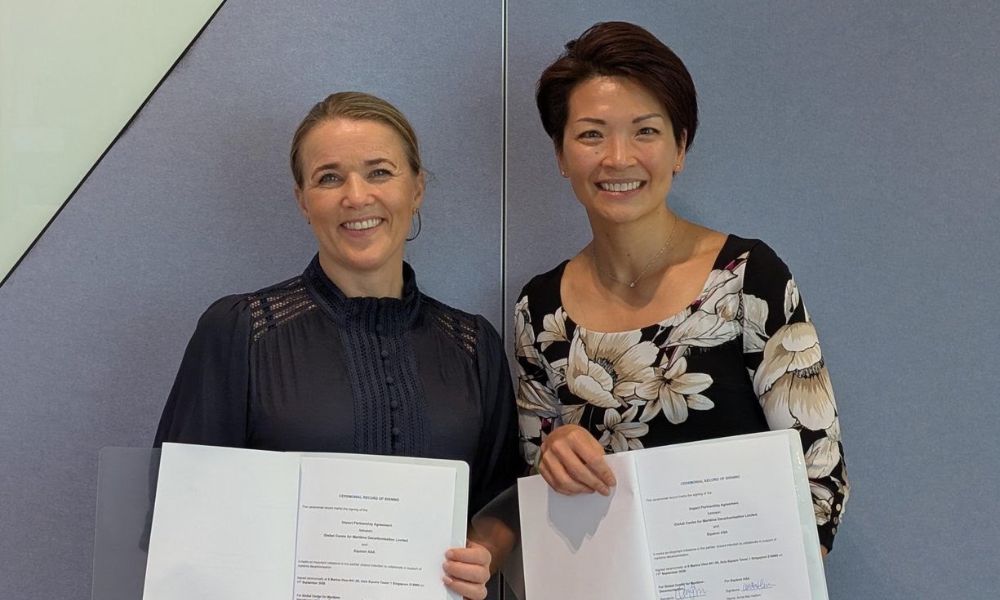
The Global Centre for Maritime Decarbonisation (GCMD) and Equinor on Tuesday (22 September) announced a five-year Impact partnership.

The partnership brings together GCMD’s capabilities in conducting real-world maritime pilots with Equinor’s experience as a charterer, energy provider and developer of low-carbon solutions.

Together, the organisations will leverage their complementary expertise to help address technical and operational gaps in scaling alternative marine fuels and supporting the development and uptake of other maritime decarbonisation solutions.

GCMD’s work on alternative fuels, including biofuels, ammonia and methanol, focuses on two critical aspects of deployment: operational safety and robust monitoring, reporting and verification (MRV). Its pilots and studies are generating operational data to support safe bunkering and handling of these fuels. 

At the same time, its assurance work seeks to strengthen confidence in quantity, quality and GHG emissions abatement.

“Equinor brings extensive experience as a vessel charterer and marine fuel supplier. This includes chartering dual-fuel LNG, LPG and methanol tankers, testing and using biofuels and supplying methanol to the maritime sector,” GCMD said.

Equinor is also piloting the use and supply of ammonia as a marine fuel, contributing to the development of associated safety, regulatory and bunkering arrangements.

Combining these perspectives can help address practical barriers to alternative fuels deployment while strengthening assurance across emerging marine fuel value chains.

Beyond alternative fuels, GCMD is working to accelerate the adoption of solutions that can reduce emissions from the existing fleet, including energy efficiency technologies (EETs) and onboard carbon capture and storage (OCCS).

GCMD’s work on EETs includes quantifying real-world fuel savings from technologies such as wind-assisted propulsion systems and developing financing mechanisms to scale their adoption. In OCCS, Project CAPTURED demonstrated an end-to-end value chain for onboard captured and liquefied CO₂, generating evidence that contributed to the recognition of captured CO2 under the EU ETS and in-principle support at the IMO for recognising carbon mineralisation as permanent storage.

Equinor brings decades of experience in offshore CO₂ storage, including its role in the development and operation of Northern Lights, the world’s first cross-border CO2 transport and storage facility, where liquefied CO₂ is transported by ship to an onshore receiving terminal before it is sent by pipeline for permanent geological storage beneath the North Sea.

Through the partnership, GCMD and Equinor will explore opportunities to combine their respective capabilities and experience to support the deployment and scaling of maritime decarbonisation solutions.


Photo credit: Global Centre for Maritime Decarbonisation
Published: 23 September, 2026

Continue Reading

Decarbonisation

Wah Kwong NatPower, AREL partner on maritime electrification in Hong Kong

Collaboration will examine opportunities to deploy shore power facilities, vessel charging infrastructure and battery energy storage solutions, alongside the development of electric vessels.
Admin

Published

on

By

Wah Kwong NatPower, AREL partner on maritime electrification in Hong Kong

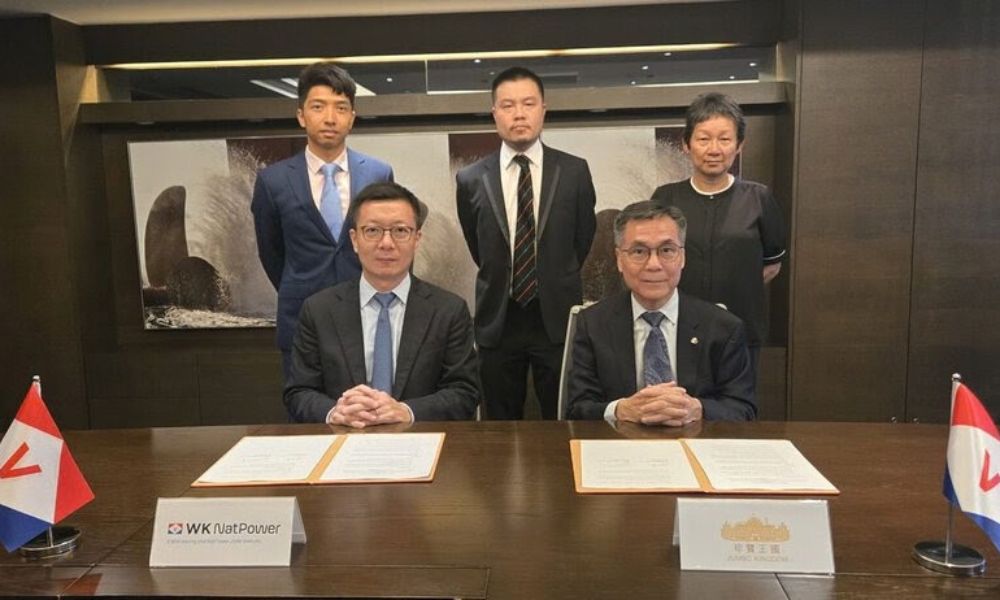
Wah Kwong NatPower (WK NatPower) on Tuesday (22 September) said it has signed a Memorandum of Understanding (MoU) with Aberdeen Restaurant Enterprises Limited (AREL) to explore the electrification of piers, vessels and supporting energy infrastructure in the Aberdeen area of Hong Kong.

Against the backdrop of the HKSAR Government’s latest policy direction to advance green shipping, smart port development and shore power infrastructure, WK NatPower and AREL will explore the development of an integrated marine electrification ecosystem in the Aberdeen and Shum Wan areas. 

The collaboration will examine opportunities to deploy shore power facilities, vessel charging infrastructure and battery energy storage solutions, alongside the development of electric vessels for future transport and tourism services.

The initiative supports Hong Kong to become a leading hub for sustainable maritime innovation while contributing to the revitalisation of one of the city’s most iconic waterfront communities. As an initial phase of the collaboration, the two parties will explore the opportunity for the construction of a series of electric vessels and transport vessels. 

The initiative will also examine the potential deployment of the ApliAber® electric vessel fleet as a new benchmark for sustainable waterfront mobility and hospitality experiences in Hong Kong.

Vincent Ni, General Manager of WK NatPower, said: “This MoU marks an important step in supporting Hong Kong’s marine energy transition. Aberdeen has long been an iconic part of Hong Kong’s maritime heritage, and we are delighted to explore opportunities to develop integrated shore power and vessel electrification solutions that can support a cleaner and more sustainable future for the harbour.”

Wong Tai Yu, Director of AREL, said: “Through this collaboration, we look forward to exploring practical ways to introduce cleaner energy, electric vessels and sustainable waterfront experiences, while supporting the revitalization of Jumbo Kingdom® for future generations.”


Photo credit: Wah Kwong NatPower
Published: 23 September, 2026

Continue Reading

Ammonia

IMO technical seminar examines ammonia bunkering and infrastructure

Around 800 participants exchanged technical information and experiences on the potential use of ammonia as a marine fuel, including developments in production and bunkering and infrastructure.
Admin

Published

on

By

16

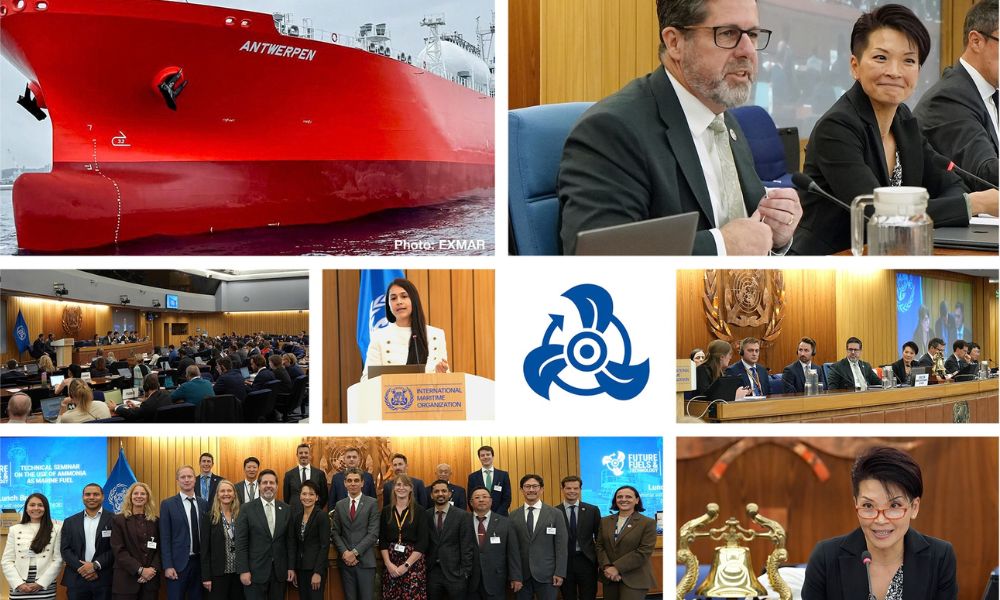
The International Maritime Organization on Tuesday (22 September) said international experts have shared their insight on the use of ammonia as marine fuel during an IMO technical seminar at IMO Headquarters in London (17 September). 

The seminar was organized by IMO’s Future Fuels and Technology Project (FFT Project) and brought together around 800 participants from IMO Member States, NGOs, IGOs, industry and academia, both in person and online. 

Professor Lynn Loo, Chief Executive Officer of the Global Centre for Maritime Decarbonization, moderated the event. 

Participants exchanged technical information and experiences on the potential use of ammonia as a marine fuel, including developments in production, bunkering and infrastructure, technology developments, notably on ammonia-fuelled engines and control of emissions, as well as safety and environmental considerations. 

Opening the seminar, David Osborn, Director of the IMO Marine Environment Division, highlighted the importance of technical knowledge in supporting discussions on alternative fuels.

“Sound policy must nevertheless rest on sound evidence. The decisions this Organization takes on alternative fuels depend on a clear and shared understanding of what the technology can do today, where the difficulties lie, and what remains unresolved,” he said. 

IMO’s Future Fuels and Technology Project (FFT Project) is a partnership between the Government of the Republic of Korea and IMO, aiming to support GHG emissions reduction from international shipping by promoting the uptake of future fuels and technology. 

The seminar was the fifth technical seminar organized under the project, following previous editions covering onboard carbon capture and storage (OCCS), energy transition of shipping (Hong Kong Maritime week), biofuels and methane-based fuels

Note: Video recording and presentations of the seminar is available here


Photo credit: International Maritime Organization
Published: 23 September, 2026

Continue Reading

Trending