Connect with us

Business

ECSA chastises parliament vote to include shipping in EU Emission Trading System

The move risks introducing sub-optimal environmental laws at the EU level, contributing to a regulatory patchwork and increasing international fragmentation, it said.

Admin

Published

on

sara kurfess Q3CO1ZOZ6ZI unsplash

The European Committee Shipowners’ Associations (ECSA) on Tuesday (15 September) said it regrets a decision of the plenary in the European Parliament to draft a proposal to include shipping under the EU’s Emission Trading System (EU ETS). 

This proposal has been put forward before a thorough impact assessment had been carried out, and under an unrelated piece of the legislation on the emissions monitoring system – the EU MRV.

The proposal aims to pre-empt the conclusions of the European Commission’s impact assessment study and undermines the ongoing negotiations at the UN International Maritime Organisation. 

The move risks introducing sub-optimal environmental regulations at the EU level, contributing to a regulatory patchwork and an increased fragmentation at the international level, said ECSA. 

It also noted that a recent study about the implications of the EU ETS on international shipping found that such a measure would undermine the international negotiations to implement the IMO’s Initial Strategy on Reduction of GHG Emissions from Ships and would increase political tension with third countries, potentially leading to trade disputes. 

Another essential finding relates to the administrative burden and associated costs especially for small and medium-sized enterprises (SMEs), which accounts for the majority of shipping companies. 

The use of the revenues is another critical point: depending on the final set-up, the revenues from the EU ETS would most likely not support efficiency projects and, in that case, it would not facilitate the energy transition of the sector.

The shipping industry is fully committed to eradicating its GHG emissions completely, in line with the ambitious targets set in the initial IMO GHG strategy concluded in 2018, said ECSA.

The IMO Strategy includes a target to cut total GHG emissions from international shipping by at least 50% by 2050 (compared to 2008). This implies that new builds will already have to be carbon-free in 2030.

It also sets up a carbon intensity target for international shipping, i.e. to reduce CO2 emissions per transport work by at least 40% by 2030 towards 70% by 2050, compared to 2008. Among other measures, the IMO Strategy may also develop a global market-based measure to help deliver the agreed targets.

“The whole European shipping is fully committed to decarbonisation and stands behind the EU’s bold ambition to become the world’s first carbon-neutral continent,” said  Martin Dorsman, ECSA Secretary General.

“In our opinion, imposing any regulatory measures without measuring the impact on shipping is not prudent. Regional measures have been criticised for undermining global negotiations at UN IMO level and may slow down or even reverse the progress that has already been made

“We trust that the Council will put on hold any proposals until a thorough and comprehensive impact assessment is carried out. Any decision that will be taken has to truly work and actually deliver results.”

Related: World Shipping Council publishes paper questioning EU ETS impact on reducing GHG


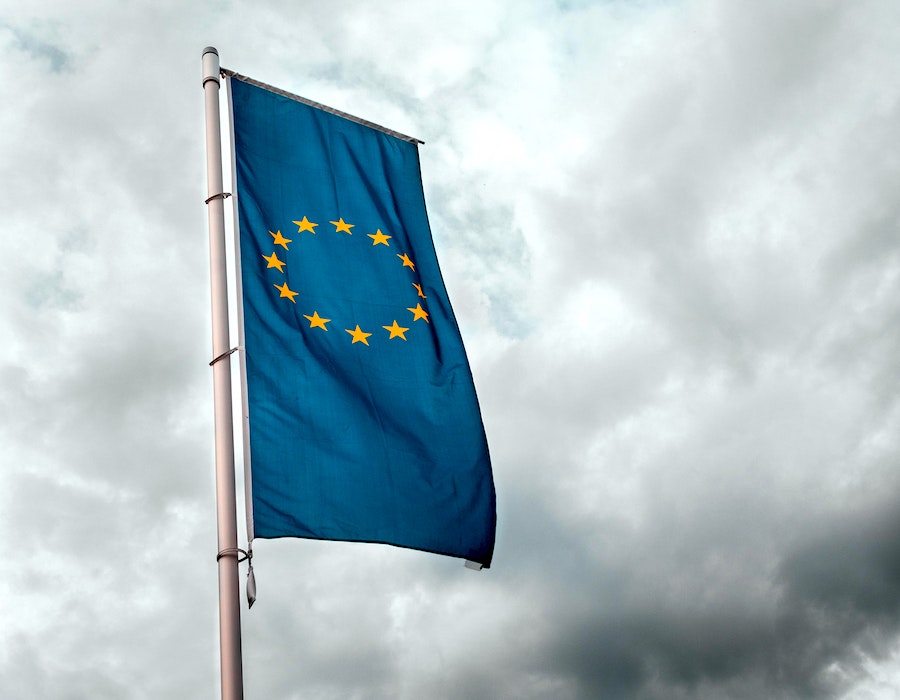
Photo credit: EU Flag
Published: 16 September, 2020

Continue Reading

Incident

MPA: 25 crew rescued after abandoning “MSC HERMES III” east of Vietnam

MRCC Singapore coordinated the rescue after receiving a distress alert at about 8.45am as the vessel was within Singapore’s Maritime Search and Rescue Region.
Admin

Published

on

By

RESIZED bunker tanker singapore

The Maritime and Port Authority of Singapore (MPA) on Tuesday (22 September) said all 25 crew members from the Liberia-registered container vessel MSC HERMES III were rescued on 22 September 2026. 

The Maritime Rescue Coordination Centre (MRCC) Singapore coordinated the rescue after receiving a distress alert at about 8.45am (Singapore Time). 

“The vessel was within Singapore’s Maritime Search and Rescue Region (MSRR), about 300km east of Vietnam,” MPA said in a statement. 

MRCC Singapore immediately issued a broadcast requesting vessels in the vicinity to render assistance. Three vessels responded, and MSC RUBY recovered all 25 crew members after they had abandoned MSC HERMES III in a lifeboat. 

“All 25 crew members are safe, with no injuries reported,” MPA said. 

“MRCC Singapore is coordinating with the Vietnamese MRCC on arrangements for the rescued crew members to return safely to shore.”


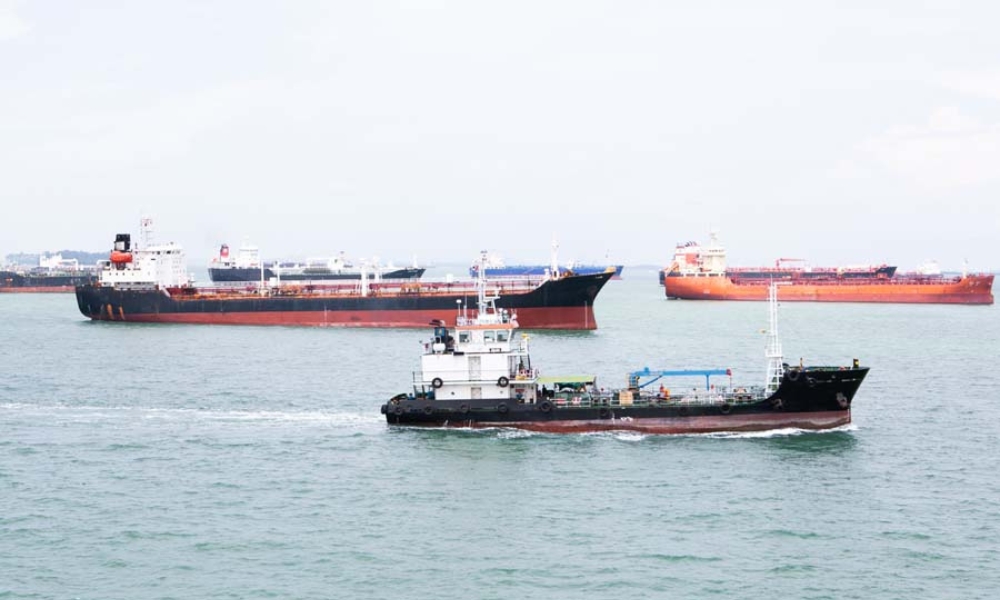
Photo credit: Manifold Times
Published: 23 September, 2026

Continue Reading

Alternative Fuels

GCMD, Equinor to combine expertise on alternative bunker fuels, decarbonisation solutions

Equinor brings extensive experience to partnership as a vessel charterer and marine fuel supplier, including chartering dual-fuel LNG and methanol tankers, testing biofuels and supplying methanol.
Admin

Published

on

By

GCMD, Equinor to combine expertise on alternative bunker fuels, decarbonisation solutions

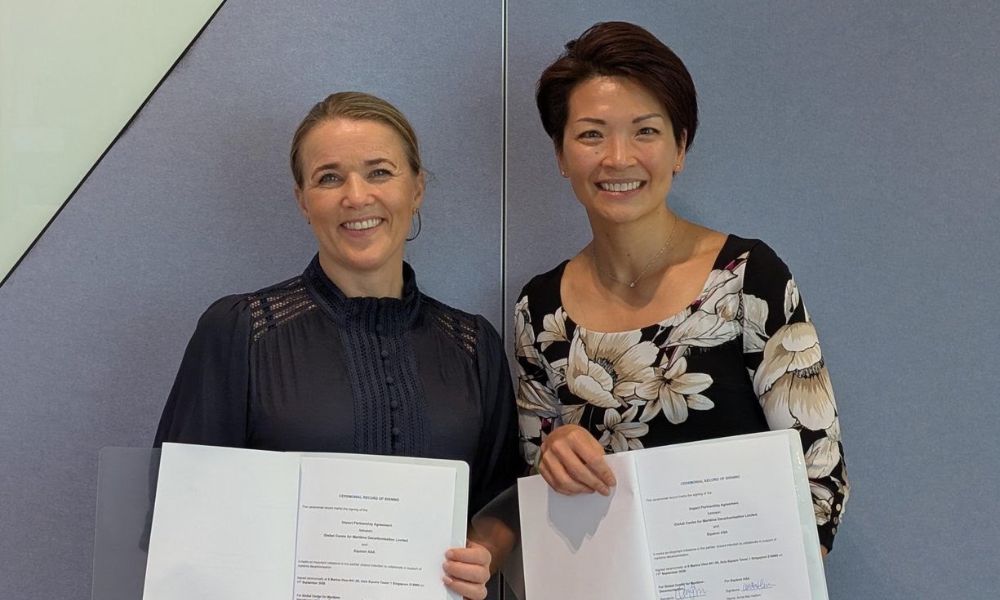
The Global Centre for Maritime Decarbonisation (GCMD) and Equinor on Tuesday (22 September) announced a five-year Impact partnership.

The partnership brings together GCMD’s capabilities in conducting real-world maritime pilots with Equinor’s experience as a charterer, energy provider and developer of low-carbon solutions.

Together, the organisations will leverage their complementary expertise to help address technical and operational gaps in scaling alternative marine fuels and supporting the development and uptake of other maritime decarbonisation solutions.

GCMD’s work on alternative fuels, including biofuels, ammonia and methanol, focuses on two critical aspects of deployment: operational safety and robust monitoring, reporting and verification (MRV). Its pilots and studies are generating operational data to support safe bunkering and handling of these fuels. 

At the same time, its assurance work seeks to strengthen confidence in quantity, quality and GHG emissions abatement.

“Equinor brings extensive experience as a vessel charterer and marine fuel supplier. This includes chartering dual-fuel LNG, LPG and methanol tankers, testing and using biofuels and supplying methanol to the maritime sector,” GCMD said.

Equinor is also piloting the use and supply of ammonia as a marine fuel, contributing to the development of associated safety, regulatory and bunkering arrangements.

Combining these perspectives can help address practical barriers to alternative fuels deployment while strengthening assurance across emerging marine fuel value chains.

Beyond alternative fuels, GCMD is working to accelerate the adoption of solutions that can reduce emissions from the existing fleet, including energy efficiency technologies (EETs) and onboard carbon capture and storage (OCCS).

GCMD’s work on EETs includes quantifying real-world fuel savings from technologies such as wind-assisted propulsion systems and developing financing mechanisms to scale their adoption. In OCCS, Project CAPTURED demonstrated an end-to-end value chain for onboard captured and liquefied CO₂, generating evidence that contributed to the recognition of captured CO2 under the EU ETS and in-principle support at the IMO for recognising carbon mineralisation as permanent storage.

Equinor brings decades of experience in offshore CO₂ storage, including its role in the development and operation of Northern Lights, the world’s first cross-border CO2 transport and storage facility, where liquefied CO₂ is transported by ship to an onshore receiving terminal before it is sent by pipeline for permanent geological storage beneath the North Sea.

Through the partnership, GCMD and Equinor will explore opportunities to combine their respective capabilities and experience to support the deployment and scaling of maritime decarbonisation solutions.


Photo credit: Global Centre for Maritime Decarbonisation
Published: 23 September, 2026

Continue Reading

Decarbonisation

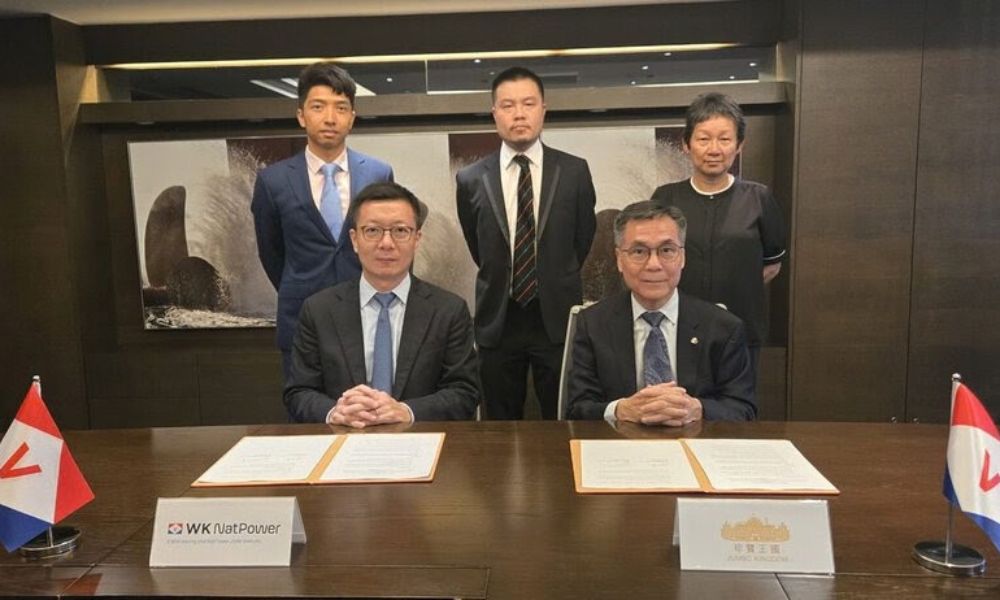
Wah Kwong NatPower, AREL partner on maritime electrification in Hong Kong

Collaboration will examine opportunities to deploy shore power facilities, vessel charging infrastructure and battery energy storage solutions, alongside the development of electric vessels.
Admin

Published

on

By

Wah Kwong NatPower, AREL partner on maritime electrification in Hong Kong

Wah Kwong NatPower (WK NatPower) on Tuesday (22 September) said it has signed a Memorandum of Understanding (MoU) with Aberdeen Restaurant Enterprises Limited (AREL) to explore the electrification of piers, vessels and supporting energy infrastructure in the Aberdeen area of Hong Kong.

Against the backdrop of the HKSAR Government’s latest policy direction to advance green shipping, smart port development and shore power infrastructure, WK NatPower and AREL will explore the development of an integrated marine electrification ecosystem in the Aberdeen and Shum Wan areas. 

The collaboration will examine opportunities to deploy shore power facilities, vessel charging infrastructure and battery energy storage solutions, alongside the development of electric vessels for future transport and tourism services.

The initiative supports Hong Kong to become a leading hub for sustainable maritime innovation while contributing to the revitalisation of one of the city’s most iconic waterfront communities. As an initial phase of the collaboration, the two parties will explore the opportunity for the construction of a series of electric vessels and transport vessels. 

The initiative will also examine the potential deployment of the ApliAber® electric vessel fleet as a new benchmark for sustainable waterfront mobility and hospitality experiences in Hong Kong.

Vincent Ni, General Manager of WK NatPower, said: “This MoU marks an important step in supporting Hong Kong’s marine energy transition. Aberdeen has long been an iconic part of Hong Kong’s maritime heritage, and we are delighted to explore opportunities to develop integrated shore power and vessel electrification solutions that can support a cleaner and more sustainable future for the harbour.”

Wong Tai Yu, Director of AREL, said: “Through this collaboration, we look forward to exploring practical ways to introduce cleaner energy, electric vessels and sustainable waterfront experiences, while supporting the revitalization of Jumbo Kingdom® for future generations.”


Photo credit: Wah Kwong NatPower
Published: 23 September, 2026

Continue Reading

Trending