Connect with us

Legal

HFW: Timing of contaminated bunkers ‘highly coincidental’

Unnamed sources suggest contaminated bunkers in US Gulf and Singapore derived from same source.

Admin

Published

on

5b9752ad794b4 1536643757

The following article regarding contaminated marine fuel at Singapore has been written by international law firm HFW and has been shared with Manifold Times:

Bunker Contamination in Singapore – The flow of contaminated bunkers heads East
Following our recent Briefing on bunker contamination in the US Gulf new reports of contaminated bunkers in Singapore have given rise to further concerns, highlighting the potential inadequacy of the conventional testing regime and the need for industry focus on quality controls in the supply chain. It is currently unclear whether the contaminated stems reported in Singapore are linked to those in the US Gulf region.

However, the timing is highly coincidental and some unnamed sources have suggested that the contaminated bunkers in the US Gulf and Singapore derive from the same source.

Bunker contamination in Singapore – what we know so far
At least one report suggests that six samples of marine fuel recently sold in Singapore led to numerous technical problems for vessels. These include severe sludging at centrifuges, clogged pipelines and overwhelmed fuel filters.

The scale of the contamination is still undetermined. However, given Singapore's position as the world's largest bunkering port, this latest round of contamination could have far-reaching implications throughout Southeast Asia. Initial reports suggest that 'Estonian type oil shale' and 'US type fracked shale oil' are at the root of the issue, whilst principle contaminants identified include both styrene and phenol. Styrene is a liquid hydrocarbon used to manufacture polystyrene, a widely used plastic, and phenol, also identified in the list of US Gulf off-spec bunker contaminants, is an organic compound used in the manufacture of a variety of products.

As the scale of the contamination becomes clearer over time, the issues for ship owners, charterers and bunkers suppliers will become increasingly apparent. The legal and practical issues arising will be analogous to those already addressed by us in the wake of the recent US Gulf contamination 1.

Problems and solutions
Like the US Gulf contamination, the off-spec bunkers reported in Singapore were not apparently detected by the ISO 8217 testing requirements. The reoccurring theme that ISO 8217 testing alone is inadequate to detect a host of contaminants raises the question whether it is practical or feasible to overhaul the ISO 8217 to bring about more stringent testing to try and identify harmful compounds before they pass the ship's manifold – prevention will always be the best cure. To underscore this, we are informed by marine surveyors in Singapore that they are now under greater pressure to release testing results more speedily.

In light of the problems it is clear that quality control, and how this will be implemented, must be an industry focus, particularly in the lead up to the 2020 Low Sulphur Regulations coming into force on 1 January 2020. The concern is that the increased blending expected in order to meet low sulphur requirements will greatly increase the potential of importing contaminants potentially harmful to a vessel.

In this regard, the latest sixth edition of ISO 8217 released in May 2017 (i.e. ISO 8217:2017) is set to be updated to deal with the introduction of the 2020 Low Sulphur Regulations 2, but may need further review if the current contamination issues persist.

The drafters of the ISO 8217:2017 clearly recognised the problem of bunker contamination and the challenges faced. This latest version attempts to place greater emphasis at Annex B on the supplier monitoring quality control, requiring that the "refinery, fuel terminal or any other supply facility, including supply barges and truck materials, having in place adequate quality assurance and management of change procedures to ensure that the resultant fuel is compliant with the requirements of Clause 5". (Clause 5 is the clause that provides that the fuel shall be free from harmful material). Annex B also refers to the difficulty of testing the fuel for material that can cause it to be unacceptable, underlining the technical and practical problems arising in the hunt for harmful contaminants.

Subject to expert input, in light of the recent spate of contamination issues, a shorter term solution for concerned parties might involve an annex to bunker supply or time charterparty contracts requiring the testing for specific problematic compounds identified in recent cases, such as phenols.

Given the serious consequences arising from burning off-spec bunkers and the challenges faced under the current testing regime, it is increasingly important for parties to focus their minds on the contractual allocation of responsibility and liability with respect to bunker quality. Clear drafting and allocation of risk is the best way to try and avoid costly litigation.

Finally, greater transparency of the supply chain is a key issue to the longer term strategy for quality control and accountability. We are pleased to note recent reports that trials of blockchain technology are now underway in the marine fuel industry, a potential solution hypothesised in our previous briefing.

We will continue to monitor developments on bunker contamination within affected regions as matters continue to unfold. At this stage, key stakeholders are recommended to exercise caution when purchasing marine fuel in Singapore and the US Gulf Coast region and to seek the necessary assurances.

Should you have any questions, please do not hesitate to contact the authors of this briefing.

Footnotes

  1. http://www.hfw.com/Bunker-contamination-in-the-US-Gulf-Legal-and-practical-implications
  2. A separate briefing considering the practical and legal issues arising from the forthcoming implementation of the 2020 Low Sulphur Regulations will follow. Paul Deanis HFW's representative on BIMCO's subcommittee established for the development of a charterparty clause that will address the 2020 global sulphur limit of no more than 0.50% that will come into force on 1 January 2020. Rory Grout is assisting.

Readers with further questions may contact the authors below:

Paul Dean
Partner, London
T +44 (0)20 7264 8363
E [email protected]

Toby Stephens
Partner, Singapore
T +65 6411 5379
E [email protected]

Wole Olufunwa
Senior Associate, Singapore
T +65 6411 5344
E [email protected]

Rory Grout
Senior Associates, London
T +44 (0)20 7264 8198
E [email protected]

William Pyle
Associate, Singapore
T +65 6411 5323
E [email protected]

Photo credit: HFW
Published: 11 September, 2018


Continue Reading

Winding up

Singapore: Final general meetings scheduled for Dromond Shipping, related firms

A member is entitled to attend the meetings and should notify the liquidators’ team office via email no later than 48 hours prior to the meeting.

Admin

Published

on

By

steve pb from Pixabay

The final general meetings of Dromond Shipping Pte Ltd  and related companies have been scheduled to take place on 19 October, according to the company’s liquidator on a notice posted on Friday (18 September) on the Government Gazette.

The other companies are Tidewater Emergency Response Services Pte Ltd, Tidewater Production Solutions Pte Ltd and Tidewater Salvage Pte Ltd. 

The final general meetings of the members of the companies will be held via electronic means on 19 October 2026 at 2.00 pm, 2.30 pm, 3.00 pm and 3.30 pm (Singapore time), respectively.

The meetings are being held for the purpose of having accounts laid before the members showing the manner in which the winding up of the respective companies has been conducted and how the property of the respective companies has been disposed of and to hear any explanation that may be given by the liquidators. 

The details of the liquidator is as follows:

Tan Kim Han
Joint and Several Liquidators
137 Amoy Street, #02-03, Far East Square
Singapore 049965

Note: A member is entitled to attend the above meeting and should notify the Liquidators’ team office via email to [email protected] or [email protected] no later than 48 hours prior to the meeting.


Photo credit: steve pb from Pixabay
Published: 21 September, 2026

Continue Reading

Winding up

Singapore: Liquidator of Da Xin Tankers, Nan Chiau Maritime issues notices of dividend

Da Xin Tankers’s second interim dividend and Nan Chiau Maritime’s third interim dividend are payable from 17 September, according to Government Gazette notices.

Admin

Published

on

By

Resized benjamin child

Notices of dividend for Da Xin Tankers Pte Ltd and Nan Chiau Maritime Pte Ltd, which are currently in creditors’ voluntary liquidation, were published on the Government Gazette on Thursday (17 September). 

The following are the details of the notice for Da Xin Tankers:

Name of Company : Da Xin Tankers (Pte) Ltd (In Creditor’s Voluntary Liquidation)
Unique Entity No. / Registration No. : 198400895W
Address of Registered Office : c/o Grant Thornton Singapore Private Limited, 8 Marina View, #40-04/05 Asia Square Tower 1, Singapore 018960
Amount per centum (US$) : 5.00 cents to a dollar of admitted unsecured claims
First and Final or otherwise : Second Interim Dividend
When payable : 17 September 2026
Where payable : Entitlements will be made either by way of telegraphic transfer or by cheque, to be collected from the Company’s registered address as above

The following are the details of the notice for Nan Chiau Maritime:

Name of Company : Nan Chiau Maritime (Pte.) Ltd. (In Creditors’ Voluntary Liquidation)
Unique Entity No. / Registration No.: 200814296Z
Address of Registered Office : c/o Grant Thornton Singapore Private Limited, 8 Marina View, #40-04/05 Asia Square Tower 1, Singapore 018960
Amount per centum (US$) : 7.00 cents to a dollar of admitted unsecured claims
First and Final or otherwise : Third Interim Dividend
When payable : 17 September 2026
Where payable : Entitlements will be made either by way of telegraphic transfer or by cheque, to be collected from the Company’s registered address as above.


Photo credit: Benjamin Child
Published: 18 September, 2026

Continue Reading

Winding up

Singapore: Marine fuel testing firm CCIC Singapore faces winding up application

Application for the winding up of CCIC Singapore Pte Ltd was filed by Hong Kong-registered CCIC International Holding Limited on 7 September, according to Government Gazette notice.
Admin

Published

on

By

CCIC SG

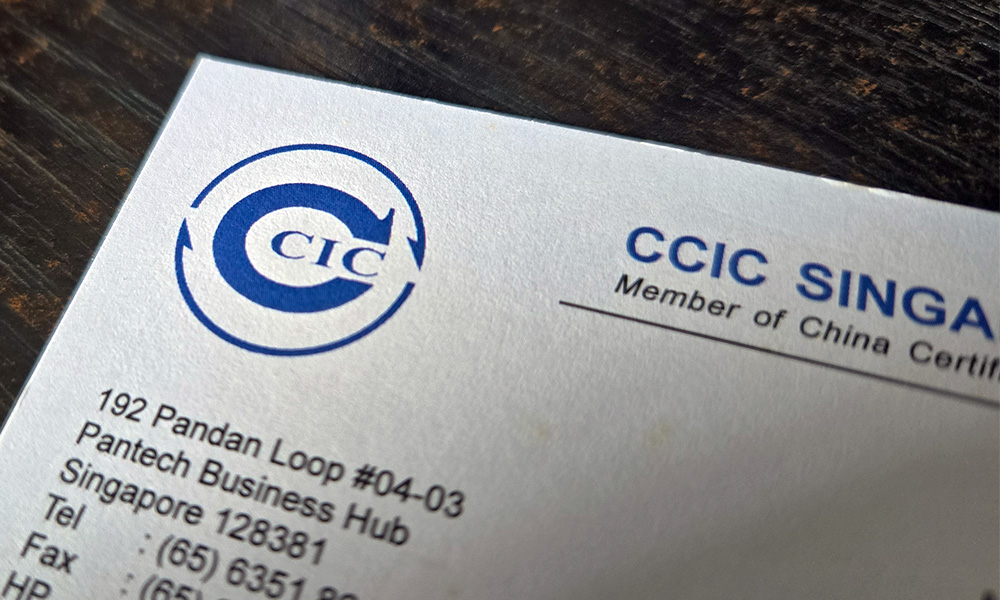
An application for the winding up of marine fuel testing and surveying firm CCIC Singapore Pte Ltd (CCIC Singapore) was filed by Hong Kong-registered CCIC International Holding Limited on 7 September, according to a Monday (14 September) notice on the Government Gazette.

It noted the winding up application is directed to be heard before the Judge sitting in the General Division of the High Court at 10am on 2 October.

Manifold Times previously reported US Department of the Treasury’s Office of Foreign Assets Control (OFAC) sanctioned nearly two dozen firms operating in multiple jurisdictions, including CCIC Singapore.

OFAC alleged that Sepehr Energy “consistently relied” on CCIC Singapore to accomplish not only the necessary pre-delivery cargo inspections required before oil is transferred to China, but also to conceal the oil’s Iranian origins.

In late 2024, CCIC Singapore provided inspection services during a ship-to-ship transfer of approximately two million barrels of Iranian oil from the sanctioned vessel and Sepehr Energy-affiliated SIRI (IMO 9281683), formerly known as the ANTHEA. 

In June 2025, CNA reported that the company laid off hundreds of workers after it was hit with the sanctions. Later, the CCIC Singapore told CNA that the layoffs were due to the impact of the sanctions which was greater than expected, and that it has ceased operations in Singapore. 

According to the Government Gazette notice, any creditor or contributory of the company desiring to support or oppose the making of an order on the winding up application may appear at the time of hearing by himself or his counsel for that purpose.

A copy of the winding up application will be furnished to any creditor or contributory of the company requiring the copy of the winding up application by the solicitors of the applicant’s, Oon & Bazul LLC, on payment of the regulated charge for the same.

The Applicant’s address is 29/F, East Tower, Shun Tak Centre, 168-200 Connaught, Rd Central, Hong Kong, China.

The Applicant’s solicitors are TKQP Law LLP of 1 Wallich Street, #07-02 Guoco Tower, Singapore 078881.

Note: Any person who intends to appear at the hearing of the winding up application must send notice of such intention to the abovenamed TKQP Law LLP, the Claimant’s solicitors, within the time and in the manner set out in rule 70 of the Insolvency, Restructuring and Dissolution (Corporate Insolvency and Restructuring) Rules 2020. The notice must be in Form CIR-15 and state the name and address of the person, or, if a firm, the name and address of the firm, and must be signed by the person, firm, or his or their solicitor (if any) and must be served and, if sent by post, must be posted in such time as in the ordinary course of post to reach the address of the Claimant’s abovenamed solicitors, at least 3 clear working days before 2 October 2026 (the day appointed for the hearing of the application).

Related: CCIC Singapore amongst nearly 24 firms named in latest US OFAC sanctions


Photo credit: Manifold Times
Published: 15 September, 2026

Continue Reading

Trending