Connect with us

Business

Malaysia: New Covid-19 measures ‘unfair’ for Labuan maritime sector, says coalition

Merchant ships have shown reluctance to visit Labuan to avoid paying substantial charges triggered by a prolonged stay at the port due to the quarantine rule.

Admin

Published

on

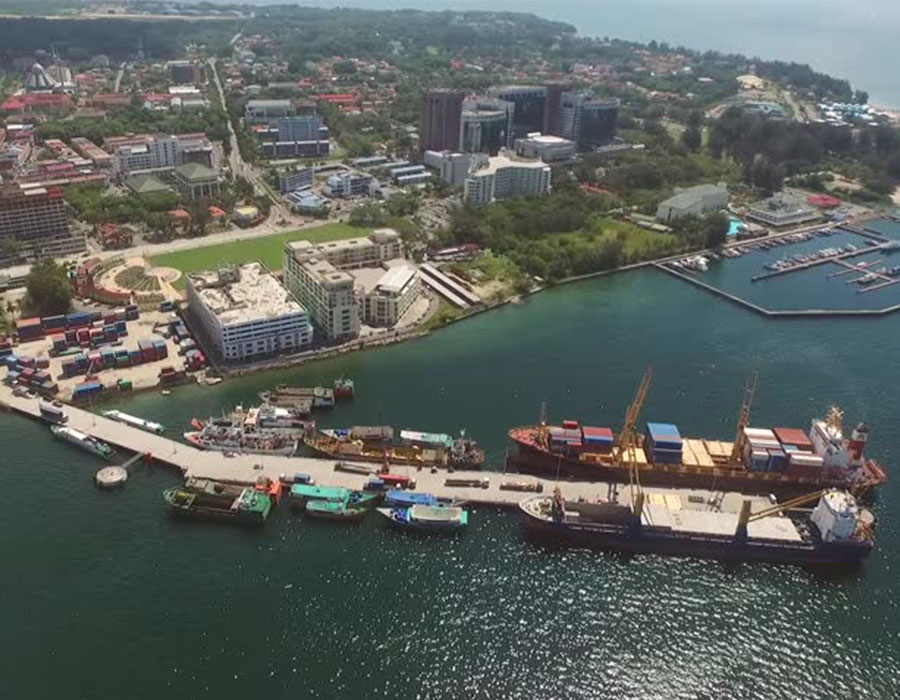
Photo A Labuan

The Labuan Phase 3 standard operating procedures (SOP) introduced on 4 August has proved unfavourable to the maritime sector, amongst others, of the Malaysian island, states the newly-formed Labuan Economic Sector Coalition (LESC).

LESC members comprises of various associations and business organisations including Labuan Freight Forwarder Association, Sabah Shipping Agent Association, Malaysia Offshore Support Vessels Owners Association (MOSVA), Malaysia Shipowners’ Association (MASA), Petronas, Labuan Shipyard & Engineering, Megah Port Management, Asian Supply Base, Sabah Flour & Feed Mills and Antara Steel.

On Wednesday (11 August), the coalition expressed grave concerns on the prospects facing Labuan due to unfair application of new SOP requirements, which are causing shipping firms and related major economic sectors to slow down or completely halt their activities on the island.

This is despite the fact that Labuan is first among territories and states in Malaysia to have fully-vaccinated over 80% of its population and achieved herd immunity, they said.

LESC lead facilitator Ts Daniel Doughty said that import and export difficulties in Labuan started on July 16 when all visiting local and foreign ships were required to stay in quarantine for a minimum of 14 days to a maximum of 21 days.

Merchant ships have shown reluctance to visit Labuan to avoid paying substantial charges triggered by a prolonged stay at the port due to the quarantine rule.

The new SOP has also disrupted the supply chain security for more than 3 weeks despite marine transportation being included in the essential services by Majlis Keselamatan Negara (MKN).

As a result, parts and machinery supplies as well as oil and gas production are affected, while ship yards are burdened with losses of contracts and delay penalties.

Appeals to the District Disaster Management Committee (JPBD Labuan) and Federal Territory Ministry by various parties at Labuan have also been left unresolved, and shipping SOP requirements that were updated have not been favourable despite Labuan successfully moving on to Phase 3 of the National Recovery Plan.

“All of this disappointment and frustration can be easily solved if JPBD Labuan is willing to have a dialogue with the stakeholders and formulate a winning SOP for all parties, and also recognise that we cannot expect to have an SOP to fit all types of business operations,” commented Ts Daniel.

“It does not work and the impact in the long run, is towards the Labuan community and not just the businesses.”

MOSVA President Mohamed Safwan Othman said that there are on average 10 to 15 offshore support vessels (OSVs) loading essential supplies for 7000+ personnel working at offshore platforms and rigs.

He explained, “with SOP phase-3, these vessels are subjected to 7-day quarantines and crews have to undergo RT-PCR test after every completed trip. One round trip which takes 1 to 3 days, involves zero contact with personnel at jetties and platforms/rigs.”

“Therefore, these vessels which perform supply run dedicated for the oil and gas industry should be exempted from repeated quarantine and RT-PCR tests.

“Before signing on, each crew has already completed a 14-day quarantine with 2 swab tests thus they should be safe in their respective green bubbles. These phase-3 SOPs are a significant interruption to the supply runs and consequently the national oil production.”

Notably, MASA representative James Ong pointed out Port Klang was not subject to similarly applied SOP requirements, despite being located in Selangor which is still in Phase 1 of the National Recovery Plan.

“The stringent SOPs currently in place would have been necessary when Labuan was still deep in the pandemic two to three months ago. However, Labuan’s situation has greatly improved thus the introduction of these SOPs are outdated,” said Ong.

Coalition Member, Megah Port Management Managing Director Tan Sri Mohd Bakri Mohd Zinin echoed MASA’s dismay on the discrimination against Labuan and warned that if the government did not take action quickly, the oil and gas sector here could come to a grinding halt.

“Vessels with Labuan-consigned containers have shown reluctance to make a stop at Labuan and have chosen instead to discharge their cargo at the nearest ports such as Sandakan and Kota Kinabalu. There, they are able to get port health clearance to dock without quarantine as well. Some shipping firms have even decided to halt their activities here because of the unfair Labuan condition,” he said.

“It is ironic that hundreds of lorries and drivers can enter the island from Sabah (human contact) each day while ships with far less crews (with no human contact) are restricted and forced to quarantine,” said Mohd Bakri.

Tan Sri Mohd Bakri added that the situation is worrying because at the end of the day, the problems of shortages and rising costs of imports would trickle down to the consumers in Labuan.

LESC has formally requested a dialogue session with the relevant authorities and has expressed their willingness to be proactive and help shape up a winning SOP. At the time of the announcement, they have yet to receive a response.

An emergency online meeting was held on 11 August among LESC members to formulate a consensus on the way forward, and most importantly to begin documenting the past and future impacts due to the unconsulted, rigid SOPs that was created by the authority.

“The shipping industry and O&G sector is presently the most significant pillar of the local economy, as this is the main source of income and livelihood for most of the people in Labuan while the tourism sector is still inactive,” concluded the Coalition’s lead facilitator Ts Daniel.

“We urge the federal government and relevant authorities to address and solve this matter immediately, before it inevitably deals a severe blow to many other essential sectors in a chain effect.”


Published: 12 August, 2021

Continue Reading

Incident

MPA: 25 crew rescued after abandoning “MSC HERMES III” east of Vietnam

MRCC Singapore coordinated the rescue after receiving a distress alert at about 8.45am as the vessel was within Singapore’s Maritime Search and Rescue Region.
Admin

Published

on

By

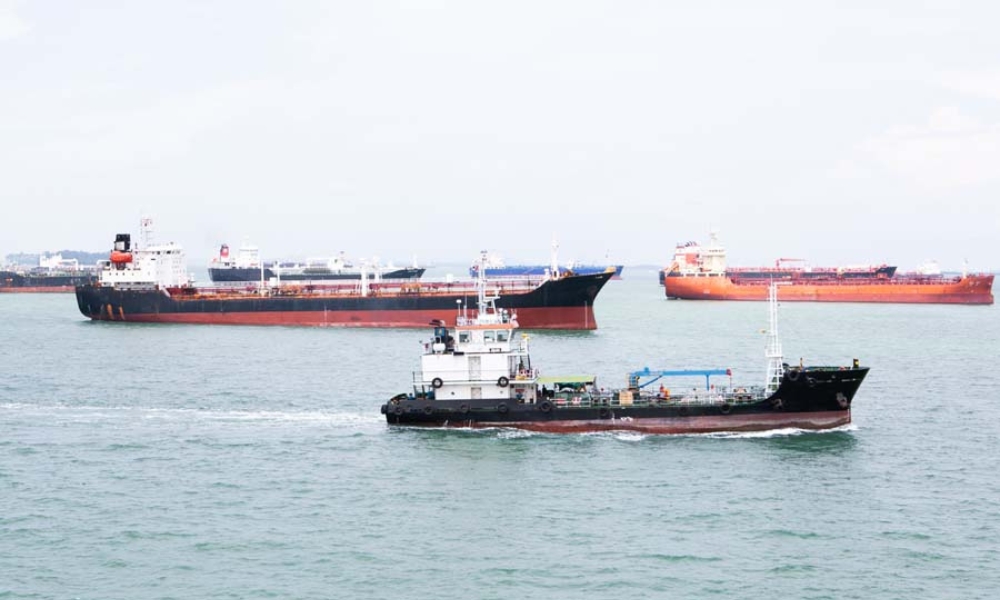
RESIZED bunker tanker singapore

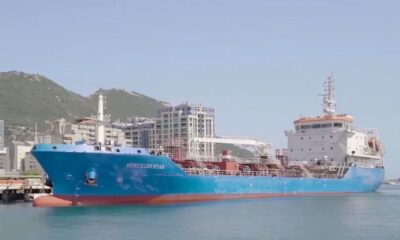
The Maritime and Port Authority of Singapore (MPA) on Tuesday (22 September) said all 25 crew members from the Liberia-registered container vessel MSC HERMES III were rescued on 22 September 2026. 

The Maritime Rescue Coordination Centre (MRCC) Singapore coordinated the rescue after receiving a distress alert at about 8.45am (Singapore Time). 

“The vessel was within Singapore’s Maritime Search and Rescue Region (MSRR), about 300km east of Vietnam,” MPA said in a statement. 

MRCC Singapore immediately issued a broadcast requesting vessels in the vicinity to render assistance. Three vessels responded, and MSC RUBY recovered all 25 crew members after they had abandoned MSC HERMES III in a lifeboat. 

“All 25 crew members are safe, with no injuries reported,” MPA said. 

“MRCC Singapore is coordinating with the Vietnamese MRCC on arrangements for the rescued crew members to return safely to shore.”


Photo credit: Manifold Times
Published: 23 September, 2026

Continue Reading

Alternative Fuels

GCMD, Equinor to combine expertise on alternative bunker fuels, decarbonisation solutions

Equinor brings extensive experience to partnership as a vessel charterer and marine fuel supplier, including chartering dual-fuel LNG and methanol tankers, testing biofuels and supplying methanol.
Admin

Published

on

By

GCMD, Equinor to combine expertise on alternative bunker fuels, decarbonisation solutions

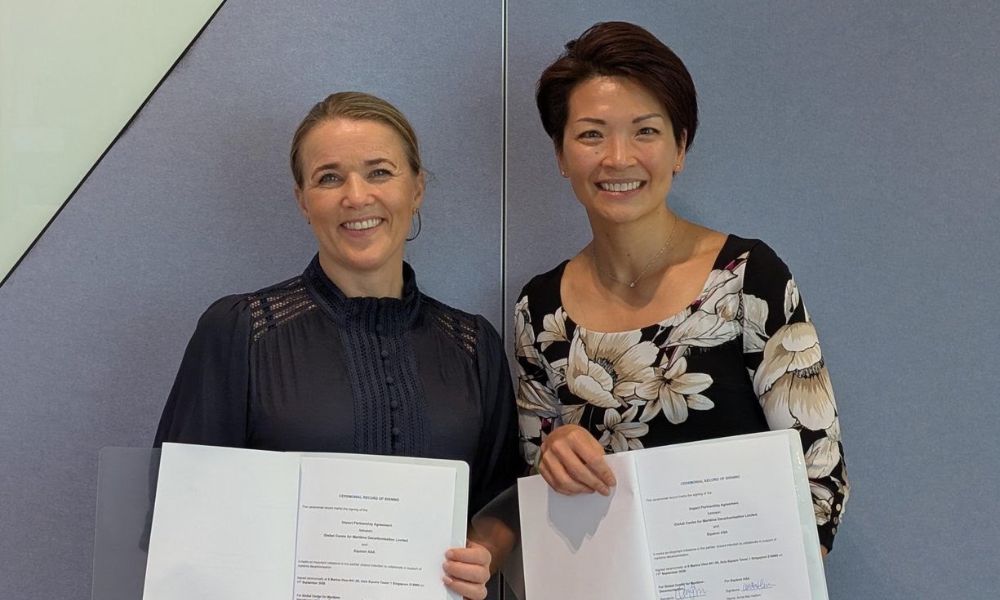
The Global Centre for Maritime Decarbonisation (GCMD) and Equinor on Tuesday (22 September) announced a five-year Impact partnership.

The partnership brings together GCMD’s capabilities in conducting real-world maritime pilots with Equinor’s experience as a charterer, energy provider and developer of low-carbon solutions.

Together, the organisations will leverage their complementary expertise to help address technical and operational gaps in scaling alternative marine fuels and supporting the development and uptake of other maritime decarbonisation solutions.

GCMD’s work on alternative fuels, including biofuels, ammonia and methanol, focuses on two critical aspects of deployment: operational safety and robust monitoring, reporting and verification (MRV). Its pilots and studies are generating operational data to support safe bunkering and handling of these fuels. 

At the same time, its assurance work seeks to strengthen confidence in quantity, quality and GHG emissions abatement.

“Equinor brings extensive experience as a vessel charterer and marine fuel supplier. This includes chartering dual-fuel LNG, LPG and methanol tankers, testing and using biofuels and supplying methanol to the maritime sector,” GCMD said.

Equinor is also piloting the use and supply of ammonia as a marine fuel, contributing to the development of associated safety, regulatory and bunkering arrangements.

Combining these perspectives can help address practical barriers to alternative fuels deployment while strengthening assurance across emerging marine fuel value chains.

Beyond alternative fuels, GCMD is working to accelerate the adoption of solutions that can reduce emissions from the existing fleet, including energy efficiency technologies (EETs) and onboard carbon capture and storage (OCCS).

GCMD’s work on EETs includes quantifying real-world fuel savings from technologies such as wind-assisted propulsion systems and developing financing mechanisms to scale their adoption. In OCCS, Project CAPTURED demonstrated an end-to-end value chain for onboard captured and liquefied CO₂, generating evidence that contributed to the recognition of captured CO2 under the EU ETS and in-principle support at the IMO for recognising carbon mineralisation as permanent storage.

Equinor brings decades of experience in offshore CO₂ storage, including its role in the development and operation of Northern Lights, the world’s first cross-border CO2 transport and storage facility, where liquefied CO₂ is transported by ship to an onshore receiving terminal before it is sent by pipeline for permanent geological storage beneath the North Sea.

Through the partnership, GCMD and Equinor will explore opportunities to combine their respective capabilities and experience to support the deployment and scaling of maritime decarbonisation solutions.


Photo credit: Global Centre for Maritime Decarbonisation
Published: 23 September, 2026

Continue Reading

Decarbonisation

Wah Kwong NatPower, AREL partner on maritime electrification in Hong Kong

Collaboration will examine opportunities to deploy shore power facilities, vessel charging infrastructure and battery energy storage solutions, alongside the development of electric vessels.
Admin

Published

on

By

Wah Kwong NatPower, AREL partner on maritime electrification in Hong Kong

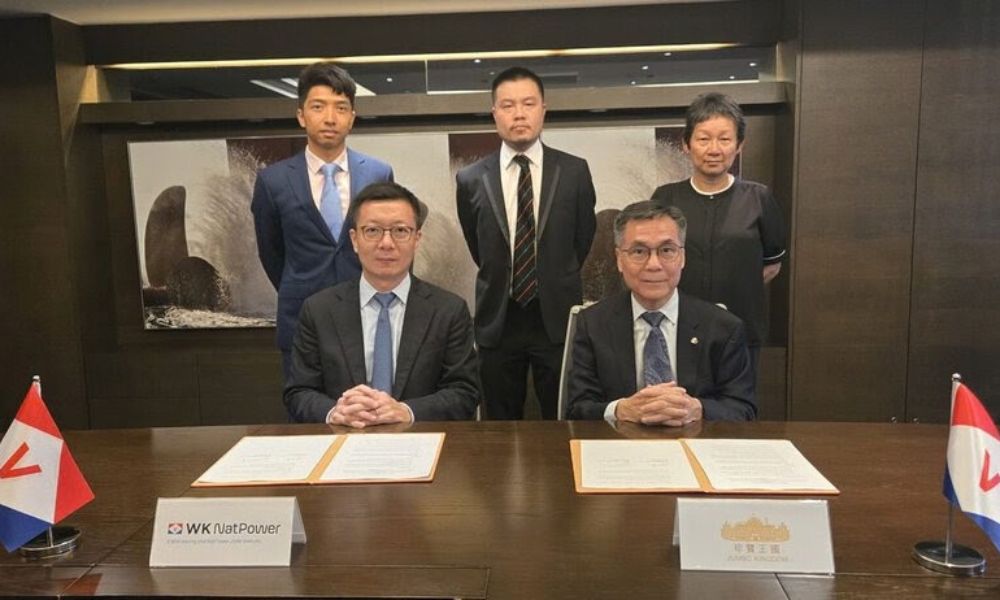
Wah Kwong NatPower (WK NatPower) on Tuesday (22 September) said it has signed a Memorandum of Understanding (MoU) with Aberdeen Restaurant Enterprises Limited (AREL) to explore the electrification of piers, vessels and supporting energy infrastructure in the Aberdeen area of Hong Kong.

Against the backdrop of the HKSAR Government’s latest policy direction to advance green shipping, smart port development and shore power infrastructure, WK NatPower and AREL will explore the development of an integrated marine electrification ecosystem in the Aberdeen and Shum Wan areas. 

The collaboration will examine opportunities to deploy shore power facilities, vessel charging infrastructure and battery energy storage solutions, alongside the development of electric vessels for future transport and tourism services.

The initiative supports Hong Kong to become a leading hub for sustainable maritime innovation while contributing to the revitalisation of one of the city’s most iconic waterfront communities. As an initial phase of the collaboration, the two parties will explore the opportunity for the construction of a series of electric vessels and transport vessels. 

The initiative will also examine the potential deployment of the ApliAber® electric vessel fleet as a new benchmark for sustainable waterfront mobility and hospitality experiences in Hong Kong.

Vincent Ni, General Manager of WK NatPower, said: “This MoU marks an important step in supporting Hong Kong’s marine energy transition. Aberdeen has long been an iconic part of Hong Kong’s maritime heritage, and we are delighted to explore opportunities to develop integrated shore power and vessel electrification solutions that can support a cleaner and more sustainable future for the harbour.”

Wong Tai Yu, Director of AREL, said: “Through this collaboration, we look forward to exploring practical ways to introduce cleaner energy, electric vessels and sustainable waterfront experiences, while supporting the revitalization of Jumbo Kingdom® for future generations.”


Photo credit: Wah Kwong NatPower
Published: 23 September, 2026

Continue Reading

Trending