Connect with us

Business

Official: Aegean auditors alleges up to $300 million ‘misappropriated’

Principal beneficiary is Fujairah-based OilTank Engineering & Consulting contract with Aegean subsidiary.


Admin

Published

on

5bdf987d6f1f8 1541380221

Up to USD $300 million of cash from New York-listed bunkering firm Aegean Marine Petroleum Network (Aegean)’s accounts and other assets were misappropriated through fraudulent activities, alleges its audit committee.

Earlier on June 2018, the committee believed that approximately USD $200 million of accounts receivable on the Aegean’s books and records at December 31, 2017 would need to be written off.

To date, it now believes up to USD $300 million of the company cash and other assets were misappropriated through fraudulent activities.

It claims the principal beneficiary of the misappropriation is OilTank Engineering & Consulting Ltd. (OilTank), a company based in Fujairah and incorporated on March 15, 2010 in the Marshall Islands.

On March 31, 2010 OilTank entered into a contract with Aegean’s subsidiary to oversee the construction of the Fujairah Oil Terminal Facility; the audit committee believes that this contract was used to misappropriate Aegean’s funds through inflated contracts and fraudulent pricing.

The audit committee has reason to believe that OilTank is controlled by a former affiliate of Aegean.

“As of December 31, 2017, the company and/or its subsidiaries had an aggregate of approximately USD$200 million in accounts receivable that arose from purported commercial transactions that occurred in 2015, 2016, and 2017,” states the audit committee.

“These transactions lacked economic substance as the relevant counterparties were shell companies with no material assets or operations and were owned or controlled by former employees or affiliates of the company.

“The audit committee believes that the receivables were improperly recorded as part of a scheme to facilitate and conceal an extensive misappropriation of company assets channelled to OilTank, but accounted for as transactions with these shell companies. The audit committee has further confirmed that the approximately US$200 million of receivables are uncollectible and will be written off.”

The Investigation also uncovered additional actions to defraud Aegean and/or its subsidiaries, including prepayment for future oil deliveries that were never made. These fraudulent activities appear to have commenced as early as 2010.

The misappropriation of Aegean’s assets, and the fraudulent accounting entries and fictitious documentation designed to conceal it, involved over a dozen company employees, including members of senior management.

The employees who directed the scheme, which involved the creation of falsified and forged documents, including bank statements, audit confirmations, contracts, invoices and third party certifications, among others, have been terminated.

“The audit committee believes that this misconduct occurred in part because a former affiliate of Aegean has exerted significant control over company personnel and assets through various inappropriate means, including threats of economic retaliation and physical violence,” it states.

“In addition, the former affiliate continues to have access to and control over the company’s electronic and physical files.”

The audit committee, meanwhile, says attempts to access relevant emails and other electronic data stored on Aegean’s server were and continue to be obstructed as a result of, among other things, the threats of retaliation against company personnel, and at least one attempt to delete and permanently erase documents from the company’s server through the remote installation of data deletion software by a person with administrator access.

The committee is also currently actively litigating a Hellenic Data Privacy Authority (HDPA) issued provisional order which prohibits the review or use of emails and other files were collected from Aegean’s Piraeus, Greece server in connection with the investigation, due to a 22 June 2018 complaint by the former affiliate and related parties.

Based on the above development, the audit committee has concluded Aegean’s financial statements for the fiscal years ended December 31, 2015 and December 31, 2016; the periods ended March 31, 2017, June 30, 2017, September 30, 2017; as well as the fourth quarter of each of 2015, 2016 and 2017 “should no longer be relied upon”.

Moving forward, it intends to work with Aegean’s auditors, PricewaterhouseCoopers S.A. (2016 and 2017) and Deloitte Certified Public Accountants S.A. (2015), to determine the individual and net effect of the inaccurate accounting entries and the theft of company assets.

A timeline organised list of events preceding the current development have been recorded by Manifold Times below:

Related: Aegean: Forensic auditors target investigations on four companies
RelatedPresident of Aegean to leave, effective November 15
RelatedRumours: Alleged changes at Aegean’s management
RelatedMercuria starts ‘sole lender’ arrangement with Aegean
RelatedAegean establishes new management committee
RelatedMercuria bails Aegean out with $1 billion credit
RelatedOcean Intelligence comments on Aegean credit downgrade
RelatedAegean shares down 71%, to face legal investigations
RelatedAegean audit uncovers $200 million account discrepancy
RelatedAegean unfolds several business developments
RelatedAegean drops founder, elects new board members
RelatedAegean requests for ‘additional time’ to file annual report
RelatedAegean welcomes new Chief Financial Officer
RelatedLawsuit filed against Aegean’s H.E.C. acquisition
RelatedAegean to offer ‘one-stop-shop solution’ with H.E.C. acquisition
RelatedAegean in $367 million acquisition of port reception facilities services group
RelatedAegean shareholders ‘gravely concerned’ over board’s silence
RelatedShareholders nominate ‘highly qualified’ candidates to Aegean board
RelatedAegean Marine Petroleum Network under shareholder pressure

Published: 5 November, 2018
 

Continue Reading

Biofuel

China: Chimbusco completes first bonded B24 bunkering operation in Shenzhen

Chimbusco Marine Bunker (Shenzhen) completed the operation after supplying 1,300 mt of B24 marine biofuel oil for “Xin Chi Wan” vessel, at Shekou Container Terminal.

Admin

Published

on

By

China: Chimbusco completes first bonded B24 bunkering operation in Shenzhen

Zhuhai Chimbusco Petroleum Co Ltd (Chimbusco Zhuhai), a subsidiary of China Marine Bunker (PetroChina) (Chimbusco), on Monday (6 July) said the company completed its first bunkering operation since receiving its local licence in Shenzhen. 

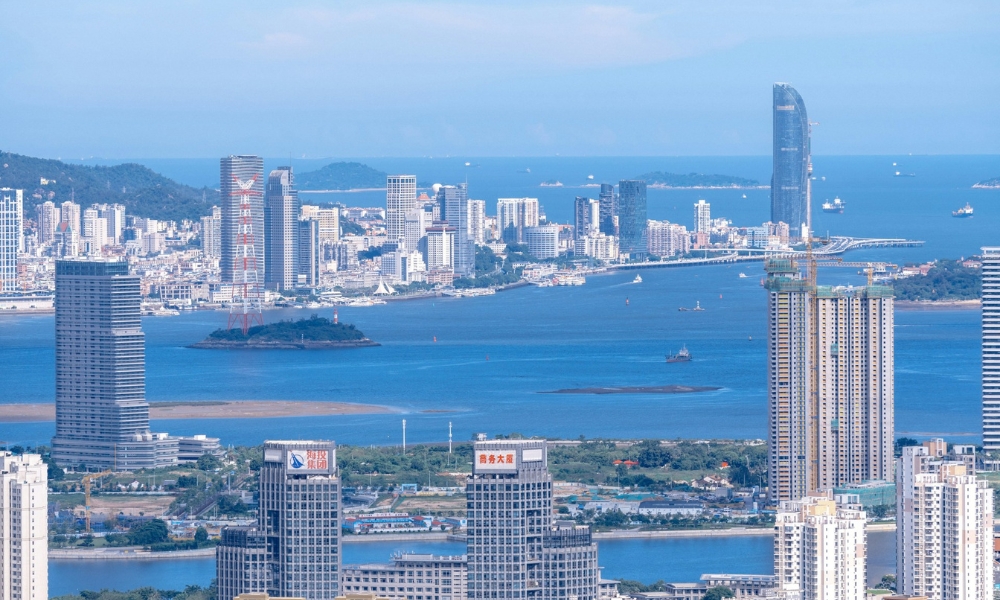
Chimbusco Marine Bunker (Shenzhen) completed the operation after supplying 1,300 metric tonnes (mt) of B24 marine biofuel oil for the Xin Chi Wan vessel, owned by COSCO Shipping Group, at the Shekou Container Terminal in Shenzhen.

The operation adopted the “cross-customs direct supply bunkering” model with the cooperation of Shenzhen and Gongbei Customs and maritime authorities.

Looking ahead, Chimbusco Marine Bunker (Shenzhen) said it will build on its local licensing and policy advantages to expand its bonded marine fuel bunkering business in Shenzhen.

The company plans to optimise its bunkering processes and improve service quality to help strengthen the city’s bonded marine fuel supply capabilities while supporting the shipping industry’s green transition.


Photo credit: Zhuhai Chimbusco Petroleum
Published: 8 July, 2026

Continue Reading

Sanctions

US reinstates Iran oil sanctions, orders wind-down by 17 July

US has revoked a licence permitting the purchase of Iranian crude oil, petrochemical products and petroleum products, with the restrictions taking effect immediately.

Admin

Published

on

By

Zbynek Burival on Unsplash

The US Treasury’s Office of Foreign Assets Control (OFAC) on Tuesday (7 July) revoked a licence that had temporarily authorised transactions involving crude oil, petrochemical products and petroleum products of Iranian origin.

Under the new licence, the purchase of Iranian crude oil, petrochemical products and petroleum products is prohibited with immediate effect.

The latest licence replaces an authorisation issued on 22 June, which had been scheduled to remain in force until 21 August. The previous authorisation permitted the bunkering of vessels engaged in the approved transactions.

Parties that entered into contracts for Iranian oil during the period in which the authorisation was in effect have until 17 July to wind down Iran-related transactions.


Photo credit: Zbynek Burival on Unsplash
Published: 8 July, 2026

Continue Reading

Legal

Russian court orders marine fuel supplier Transbunker assets transferred to state

A Moscow court has reportedly ordered the transfer of assets belonging to Russian marine fuel supplier Transbunker to state ownership.

Admin

Published

on

By

Egor Filin on Unsplash

A Moscow court has reportedly ordered the transfer of assets belonging to Russian marine fuel supplier Transbunker to state ownership.

This comes following a lawsuit alleging the company was illegally controlled through offshore corporate structures, according to The Moscow Times

The ruling grants the Russian Prosecutor General’s Office’s claims in full and takes immediate effect. Prosecutors argued that Transbunker, one of Russia’s largest marine fuel suppliers, was subject to restrictions on foreign ownership because the companies within the group qualify as strategic enterprises. 

The case targets Transbunker founders Iosif Sandler and Sergei Pugachev, both Cypriot citizens, along with Transbunker Management CEO Yelena Zavyalova. 

Prosecutors alleged the founders concealed control of the group through offshore entities in jurisdictions including Cyprus and the British Virgin Islands, while transferring profits abroad. Authorities claim RUB 19.3 billion (USD 247 million) has been moved out of Russia since 2020.

Founded in 1991, Transbunker has developed a nationwide marine fuel supply network serving Russian ports in the Baltic, Black Sea and Far East. The group owns fuel terminals in Novorossiysk, Vanino, Sakhalin and the Leningrad region, among other assets.


Photo credit: Egor Filin on Unsplash
Published: 8 July, 2026

Continue Reading

Trending