Connect with us

Alternative Fuels

Report: Maritime Green Corridors taking off – but essential stakeholders must not be left behind

As Green Shipping Corridors progress, some key industry stakeholders, especially cargo owners and bunker fuel producers, will need to be engaged as soon as possible.

Admin

Published

on

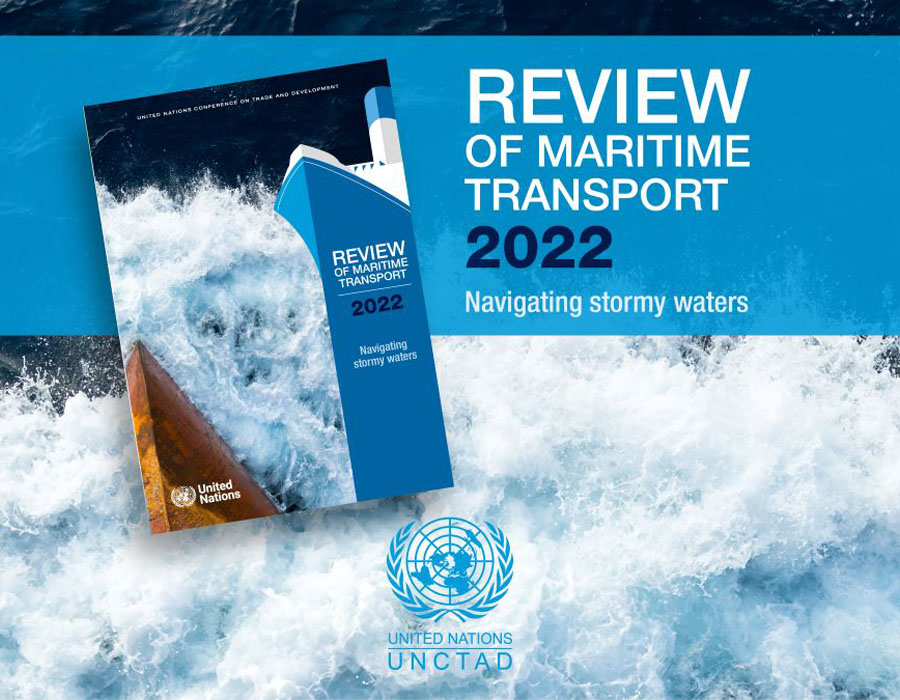
UNCTAD Launch of the Review of Maritime Transport 2022

A new November report from the Global Maritime Forum, prepared on behalf of the Getting to Zero Coalition, assesses progress towards the development of Green Shipping Corridors – maritime routes between major port hubs where zero-emission solutions are supported and demonstrated – and finds that activity during 2022 exceeded expectations.

However as maritime Green Shipping Corridors progress towards implementation, some key industry stakeholders, especially cargo owners and bunker fuel producers, will need to be engaged as soon as possible.

From the public sector, policy support from national governments will need to embrace the challenge of closing the fuel cost gap between zero-emission and fossil fuels.

The 2022 Annual Progress Report on Green Shipping Corridors is launched in association with the first anniversary of the Clydebank Declaration, which has seen 24 countries express support for the creation of Green Shipping Corridors as a way to demonstrate and deploy the zero-emission solutions necessary for shipping’s transition to zero greenhouse gas emissions.

While most maritime Green Corridor initiatives remain in their infancy, the report looks at their potential, assesses progress, identifies challenges, and offers recommendations, in particular by advancing the commercial-scale deployment of zero-emission fuels, vessels and infrastructure on promising routes. Previous analysis has indicated that for shipping’s transition to get on track, 5% of fuels used on deep sea routes would need to be scalable, zero-emission fuels such as clean ammonia, methanol, or hydrogen.

  • Overall, the report documents a level of Green Corridor activity in 2022 that has exceeded expectations, with more than 20 initiatives and 110 stakeholders from all main shipping segments involved, active engagement from the government signatories of the Clydebank Declaration, and coverage of some of the most important deep-sea routes.
  • Most of these initiatives remain at a very early stage of development, with only a handful reaching the feasibility and planning stages so far.
  • So far, maritime Green Corridors are too shipping-centric, more needs to be done to involve cargo owners and producers of future fuels if important obstacles are to be overcome.
  • While governments have shown a promising amount of initiative in developing supportive policies, they will need to consider how to use national policy levers to close the fuel cost gap between zero-emission and fossil fuels.

The Global Maritime Forum’s Project Director for Decarbonization, Jesse Fahnestock, noted that the report, like the activity it covered, was about creating a baseline for future action.

“Green Corridors have captured the maritime sector’s imagination, and the number of initiatives that have been launched in one year is genuinely exciting,” Fahnestock said.

“These corridors are all at very early stages, but as they move towards implementation, this report can provide a platform for monitoring and sharing global progress. Already, the report has identified some key recommendations for accelerating action and improving impact.”

Note: The 2022 Annual Progress Report on Green Shipping Corridors report is available for download here.


Photo credit: Cameron Venti from Unsplash
Source: Global Maritime Forum
Published: 30 November, 2022

Continue Reading

LNG Bunkering

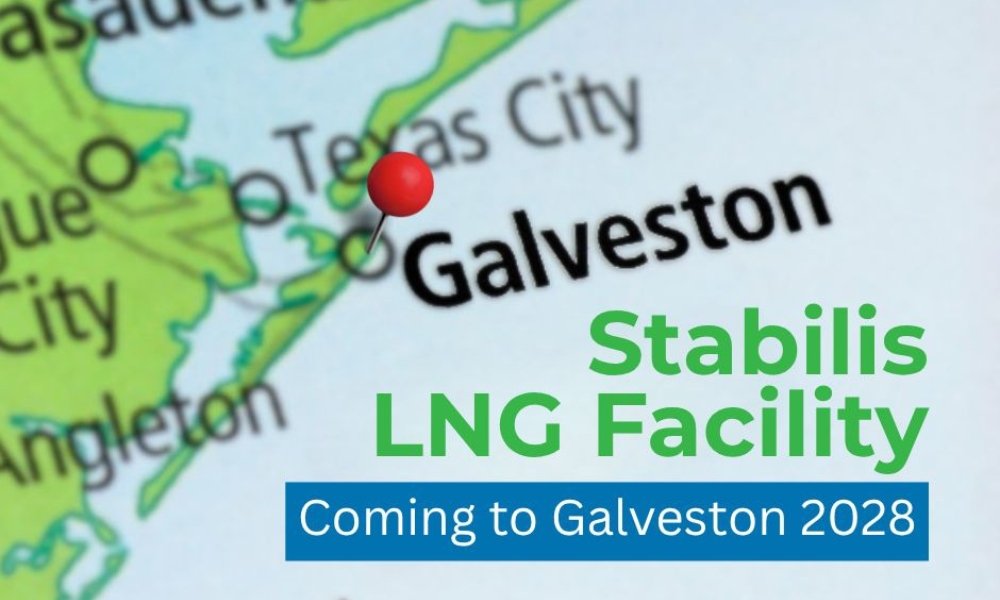
Stabilis Solutions targets Q3 2028 launch for Galveston LNG bunkering facility

Firm received a LOR from US Coast Guard following a review of a LNG Facility and associated waterfront LNG loading, marine transportation, and LNG bunkering operations in the Port of Galveston.
Admin

Published

on

By

Stabilis Solutions targets Q3 2028 launch for Galveston LNG bunkering facility

Clean energy production solutions provider Stabilis Solutions (Stabilis) on Friday (24 July) said the proposed Stabilis Galveston LNG Facility is anticipated to be in production by the third quarter of 2028. 

It will come complete with the delivery of the first new-build, dedicated Jones Act-compliant LNG bunker barge in the Galveston/Houston area.

“This is a significant regulatory and project milestone for Stabilis,” the company said. 

This comes following Stabilis receiving a Letter of Recommendation (LOR) from the US Coast Guard following their formal review of the proposed Stabilis Galveston LNG Facility and associated waterfront LNG loading, marine transportation, and LNG bunkering operations in the Port of Galveston.

“This critical endorsement of our project from the USCG Captain of the Port to the Port of Galveston and the Galveston Fire Marshal comes after a rigorous safety and security review process,” it said.

“This included a comprehensive evaluation of the potential risks, including navigation hazards, vessel traffic density impacts, emergency response capabilities, maritime security threats, and application of appropriate mitigation measures.” 

Manifold Times previously reported Stabilis terminating a previously announced 10-year agreement with a leading investment-grade global marine operator to supply LNG from the company’s proposed 350,000 gallon-per-day Galveston liquefaction facility.

As a result, the company expected delays to the anticipated final investment decision, project financing, and development timeline for the Galveston LNG facility. 

Related: Stabilis Solutions terminates 10-year LNG supply deal, expects delay in Galveston project


Photo credit: Stabilis Solutions
Published: 24 July, 2026

Continue Reading

Wind-assisted

Fairfield Maritime Japan, Neste ink charter deal for WAPS-equipped MR tanker duo

Vessels will utilise low-sulphur fuels and will be capable of being retrofitted to operate on methanol at some point in the future.

Admin

Published

on

By

RESIZED scott graham

Fairfield Maritime Japan (FMJ) on Wednesday (22 July) said it has signed a long-term charter contract with Neste for two vessels. 

The agreement enables FMJ to fund and manage the construction of two Ice Class 1A medium range (MR) oil and chemical tankers for Neste’s transports to and from its refinery in Porvoo, Finland. Neste is a producer of renewable diesel and sustainable aviation fuel (SAF), also refining a wide range of oil products in Porvoo. 

Fairfield Maritime Japan Ltd. is a portfolio company of Fairfield-Maxwell Ltd., a family office for the Sugahara family headquartered in New York City.

The two new ships will each have the capacity to ship 50,000 deadweight tons (DWT) and will be built by HD Hyundai Co., Ltd. of South Korea and delivered in the first and second quarters of 2029.

As Ice Class 1A certified ships, the two new vessels will be capable of navigating in ice conditions with the support of icebreakers, adhering to the Finnish Swedish Ice Class Rules.

These rules encompass the specific requirements for vessels navigating the Baltic Sea during the winter season. The highly ice-resistant ships will be able to approach and depart Porvoo in the winter months, contributing to operational continuity for Neste’s Porvoo facility.

The vessels will utilise low-sulphur fuels and will be capable of being retrofitted to operate on methanol at some point in the future. 

The vessels will be ready for the future with the possibility to connect to shore power when that is available. In addition, the ships will be equipped with wind-assisted propulsion systems (WAPS) to supplement the ships’ main engines. These technologies will reduce fuel consumption, emissions and operating costs.

“We’re pleased to partner with Fairfield Maritime Japan and Fairfield-Maxwell. With these new state-of-the-art vessels, we are continuing our efforts to deliver safe and efficient sea transport to and from our Porvoo refinery,” said Sander Wilgenhof, Head of Chartering, Neste.

“We are proud to be Neste’s long-term partner,” said Ryuichi Osonoe, President, Fairfield Maritime Japan. 

“We believe that our knowledge and expertise will significantly assist Neste in its sea transportation. We are looking forward to seeing these two new ships cross the sea to safely export out of Neste’s Porvoo refinery.”

“Fairfield has been a partner of choice for world-class shippers for nearly 70 years,” said Byron Sugahara, chairman of the board of Fairfield-Maxwell. 

“This agreement with Neste is  confirmation that our family’s legacy in the shipping industry remains strong and provides a solid foundation for continued growth and success.”


Photo credit: Scott Graham
Published: 24 July, 2026

Continue Reading

Nuclear

Long Beach becomes first US port to partner with MARAD on nuclear-powered shipping

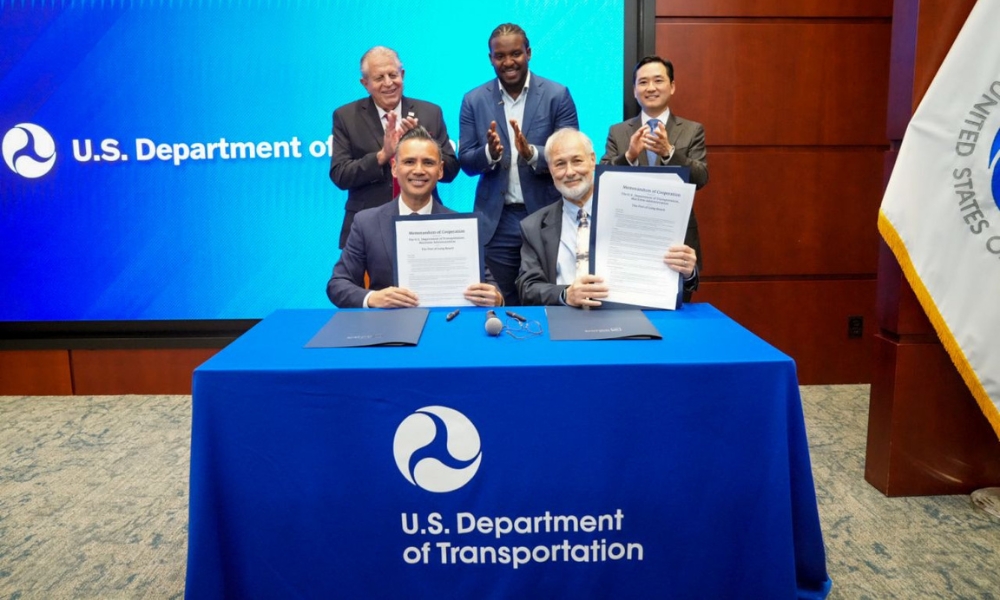
It became the first Port in the nation to sign a Memorandum of Cooperation with MARAD to advance work on development of SMR technology to power commercial vessels, ports and other maritime assets.
Admin

Published

on

By

Long Beach becomes first US port to partner with MARAD on nuclear shipping

The Port of Long Beach on Wednesday (22 July) said it became the first Port in the nation to sign a Memorandum of Cooperation with the US Department of Transportation’s Maritime Administration (MARAD) to advance work on development of small modular reactor (SMR) technology to power commercial vessels, ports and other maritime assets.

The agreement represents a significant milestone, making Long Beach the first US seaport to formalise a partnership with MARAD to establish nuclear-powered vessels for commercial service.

“This first-of-its-kind partnership with MARAD allows us to leverage strong federal leadership and private sector innovation to catalyse SMR technology as we safely and securely support the next generation of shipping,” said Port of Long Beach CEO Dr. Noel Hacegaba. 

“We’re building the Port of the Future in Long Beach, where we’ve led in global trade by moving USD 300 billion in cargo annually to support 2.7 million American jobs, and we will continue our tradition of leadership as we partner to advance nuclear energy in maritime and beyond.”

“Under President Trump’s and Secretary Duffy’s leadership, MARAD is taking decisive action to revitalise US shipbuilding and secure our national energy dominance,” said Maritime Administrator Stephen M. Carmel.

“This milestone agreement with the Port of Long Beach brings cutting-edge Small Modular Reactor technology into active testing. It ensures our maritime supply chains stay operational under any contingency while training the next generation of high-skilled American mariners.”

The agreement builds on momentum from MARAD’s Request for Information on 7 May, issued in the Federal Register, seeking industry input on the development of a US-built, scalable and commercially viable SMR for the nation’s marine transportation system. 

It also complements the Port’s new lease agreement with BlueCore Energy Inc., which allows the company to assemble, test and store maritime power modules, adding private-sector expertise to this the partnership with an American energy and technology company on the forefront of SMR development.

Demand for reliable electricity sources is forecast to grow substantially as the Port pursues a goal to double container volume by 2050. Under the agreement, the Port and MARAD will collaborate with the U.S. Coast Guard, the Department of Energy and the Nuclear Regulatory Commission to help define the operational protocols, safety standards and inspection processes needed to support the safe arrival and servicing of SMR-powered vessels at US ports, as well as to develop and share other best practices. 


Photo credit: Port of Long Beach
Published: 24 July, 2026

Continue Reading

Trending