Connect with us

Alternative Fuels

SMW 2021: Shell and Sembcorp Marine to trial hydrogen fuel cell with RoRo vessel retrofit

Trial will develop and install an auxiliary power unit PEM fuel cell on an existing RoRo vessel that sails between the mainland and Shell’s Pulau Bukom site.

Admin

Published

on

WhatsApp Image 2021 04 21 at 12.04.59 PM

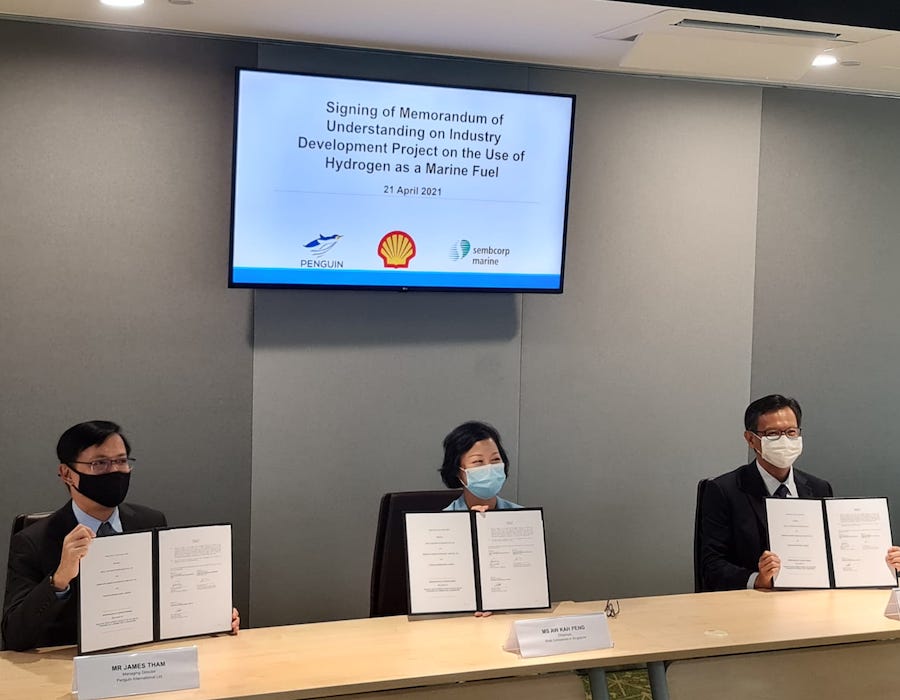
Shell on Wednesday (21 April) said it will collaborate on a feasibility study to trial the use of hydrogen fuel cells for ships, the first of its kind for Shell and in Singapore.

If successful, the trial would help pave the way to cleaner, hydrogen-powered shipping. Shell’s analysis points to hydrogen with fuel cells as the zero emissions technology which has the greatest potential to help the shipping sector achieve net zero emissions by 2050.

“This trial is an important step in demonstrating the applicability of hydrogen and fuel cells on ships,” said Nick Potter, General Manager of Shell Shipping and Maritime, Asia Pacific & Middle East.

“We see fuel cells and hydrogen as a promising pathway to decarbonising shipping and working with partners in this way will develop our understanding of this critical technology.

“This trial is a testament to the thriving sector ecosystem in Singapore that makes this possible. It is also part of our ambition to help accelerate progress towards NetZero emissions in the shipping sector, an important pillar of the Singapore economy.”

Shell, the charterer of the trial vessel and the hydrogen fuel provider, is working with SembCorp Marine Ltd and its wholly owned subsidiary LMG Marin AS, who will design the fuel cell and retrofit the vessel, as well as Penguin International, who owns the roll-on/roll-off vessel.

The trial will develop and install an auxiliary power unit Proton Exchange Membrane (PEM) fuel cell on an existing roll on/roll-off (RoRo) vessel that transports goods, vehicles and equipment on lorries between the mainland and Shell’s Pulau Bukom Manufacturing Site.

The team will first carry out a feasibility study with the intention to install the fuel cell next year. The vessel will operate for a trial period of 12 months and customers and partners will be welcomed to participate.

“Sembcorp Marine is delighted to partner Shell on this project. Hydrogen fuel cells have the potential to revolutionise shipping and transportation, enabling the industry to become greener with the ambition to achieve the 2050 target set by the International Maritime Organization to reduce total greenhouse gas emissions from international shipping by at least 50 per cent,” added Wong Weng Sun, Sembcorp Marine President and CEO.

“Hydrogen is generally regarded as a new frontier in alternative fuels for shipping,” noted James Tham, Managing Director of Penguin.

“This trial is significant for Singapore and for the maritime community at large. The outcome of this trial, which is based on retrofitting a RoRo which we operate for Shell, could quickly bring many ship owners to the forefront of this alternative fuel. As a Singaporean shipbuilder, owner and operator, we believe in playing an active part in decarbonisation.”

“The Maritime and Port Authority of Singapore (MPA) welcomes this initiative on the use of hydrogen fuel cells as a cleaner source of energy,” commented Quah Ley Hoon, Chief Executive, MPA.

“We appreciate the confidence the companies have placed on Singapore in trialing the applicability of this new technology within the Port of Singapore. This project, together with the other joint industry projects, complements efforts in Singapore to come up with commercially viable solutions to decarbonise the industry.”

In November 2020, Shell Singapore outlined a 10-year plan for how the company could make significant investments in people, assets and capabilities to repurpose its core business and aim to cut its own CO2 emissions in the country by about a third within a decade.

Shell noted it has also set out its target to be a net-zero emissions energy business by 2050, in step with society and with customers.

Shell has also announced it will be joining a consortium to develop an LNG fuel cell trial on a commercial deep-sea vessel, with partners from across the value chain, to demonstrate the maritime suitability of fuel cells and develop the technology for use with future fuels.

Photo credit: Manifold Times
Published: 21 April, 2021

Continue Reading

Alternative Fuels

MPA and MSC ink MoU to support adoption of alternative bunker fuels

MPA and MSC will explore new routes and services to strengthen connectivity, support the adoption of alternative marine fuels such as bio-LNG, and advance technologies to improve vessel energy efficiency.

Admin

Published

on

By

MPA and MSC ink MoU to support adoption of alternative bunker fuels

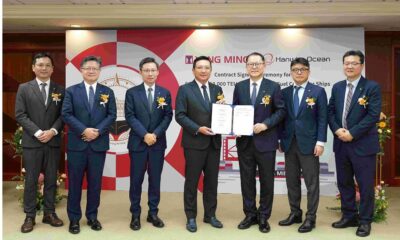
The Maritime and Port Authority of Singapore (MPA) on Wednesday (3 June) said it signed a Memorandum of Understanding (MoU) with MSC Mediterranean Shipping Company to strengthen collaboration in maritime decarbonisation, digitalisation, innovation, and manpower development. 

The MoU was signed on 25 May 2026 by Mr Ang Wee Keong, Chief Executive of MPA, and Mr Soren Toft, Chief Executive Officer of MSC.

The MoU underscores the shared commitment of MPA and MSC to foster a sustainable, digital, and future-ready maritime sector, while enhancing MSC’s operational and business activities in Singapore. This year also marks the 30th anniversary of MSC establishing its Asia Regional Office and local office in Singapore.

Under the MoU, MPA and MSC will explore new routes and services to strengthen connectivity, support the adoption of alternative marine fuels such as bio-LNG, and advance technologies to improve vessel energy efficiency and operational performance.

MPA and MSC will also collaborate on maritime digitalisation initiatives to improve operational efficiency, including streamlining vessel arrivals and port operations. 

On manpower development, MSC will support internship and scholarship opportunities through Singapore Maritime Foundation’s Maritime Outreach Network (MaritimeONE) platform, an industry-led tripartite partnership comprising industry, government and institutes of higher learning that aims to raise awareness of the maritime industry and attract quality talent into the maritime sector.

Mr Ang Wee Keong, Chief Executive of MPA, said: “This partnership reflects the strong collaboration between MPA and MSC in driving sustainability and digitalisation in the maritime sector. By working together on decarbonisation, operational efficiency and talent development, we aim to strengthen Maritime Singapore’s position as a trusted and future-ready global maritime hub.”

Mr Soren Toft, Chief Executive Officer of MSC, said: “Singapore is a strategically important hub for MSC and a key gateway to the broader Asia region. As we mark 30 years in Singapore, this MOU reinforces our long-term commitment to strengthening our presence here. MSC and Singapore are closely aligned on the priorities shaping the future of global shipping, and we look forward to deepening this partnership to drive the continued growth and resilience of the maritime industry.”


Photo credit: Maritime and Port Authority of Singapore
Published: 4 June, 2026

Continue Reading

Methanol

Seaspan and Hapag-Lloyd complete first of five methanol vessel retrofit

Following “Seaspan Yangtze”, the remaining vessels planned for retrofit under the methanol retrofit programme are “Seaspan Amazon”, “Seaspan Ganges”, “Seaspan Thames”, and “Seaspan Zambezi”.

Admin

Published

on

By

Seaspan and Hapag-Lloyd complete first of five methanol vessel retrofit

Seaspan Corporation (Seaspan) and Hapag-Lloyd on Wednesday (3 June) announced the successful completion of the first of the five vessel conversions under their methanol retrofit programme with the delivery of Seaspan Yangtze.

From the early SAVER (Seaspan Action for Vessel Energy Reduction) programme to today’s CleanBlue initiative, Seaspan has committed over USD 230 USD million across 86 vessels, executing more than 550 efficiency and retrofit projects.

Following Seaspan Yangtze, the remaining vessels planned for retrofit under the programme are Seaspan Amazon, Seaspan Ganges, Seaspan Thames, and Seaspan Zambezi. Each retrofit is expected to reduce well-to-wake CO₂e emissions by approximately 30,000 to 50,000 metric tonnes per vessel annually when operating on low-carbon methanol, while also extending vessel lifespan and enhancing fuel flexibility.

“Decarbonisation is not just about building the fleet of tomorrow, it is also about unlocking the full potential of the fleet we have today. Retrofitting and upgrades on existing fleets play a practical, immediate, and economical role in accelerating shipping’s decarbonization journey,” said Bing Chen, Chairman, President and CEO of Seaspan. 

“Project SAVER CleanBlue highlights Seaspan’s strong customer partnerships, deep technical expertise, and unique platform integrated with JV partners, such as WattSpan Maritime Technology, in executing complex and large-scale retrofit projects.”

“The successful conversion of the Seaspan Yangtze together with the planned retrofit of its four sister vessels is another important step on our ambitious path towards net-zero fleet operations by 2045,” said Silke Lehmköster, Managing Director, Fleet, Hapag-Lloyd. 

“Together with Seaspan, we are demonstrating that retrofitting existing vessels for low-carbon methanol can be a practical way to reduce emissions in shipping.”


Photo credit: Seaspan
Published: 4 June, 2026

Continue Reading

Nuclear

South Korean-led nuclear car carrier design secures LR backing

LR is working with HHI, KSOE, Hyundai Glovis, G- Marine Service and KAERI on a joint development project exploring an advanced small modular reactor (SMR) installation on a PCTC.

Admin

Published

on

By

South Korean-led nuclear car carrier design secures LR backing

Classification society Lloyd’s Register (LR) on Tuesday (2 June) said it has teamed up with South Korean shipbuilding, marine services and nuclear research organisations to advance the development of a nuclear‑assisted car carrier concept. 

LR is working with Hyundai Heavy Industries, Korea Shipbuilding & Offshore Engineering (KSOE), Hyundai Glovis, G- Marine Service and the Korea Atomic Energy Research Institute (KAERI) on a joint development project (JDP) exploring an advanced small modular reactor (SMR) installation on a pure car and truck carrier (PCTC). 

The study focused on how a Molten Salt Reactor (MSR) could be physically and operationally integrated into a large vehicle carrier. Work examined the internal arrangement and segregation of the reactor system, shielding requirements, and the impact on cargo deck layout and vehicle capacity, alongside stability and trim implications linked to the reactor’s weight and positioning. 

The partners also assessed propulsion system configuration and power delivery, as well as operational flexibility compared with conventionally fuelled PCTCs, where trade routes and port calls can be tightly constrained. 

A key focus of the project has been safety. LR led hazard identification (HAZID) and preliminary risk assessment work, focusing on containment, onboard safety systems and potential operability constraints tied to nuclear technology at sea. 

The partners will mark the project milestone with an Approval in Principle (AiP) granting ceremony on 2 June at the LR stand during Posidonia 2026. 

Sung-Gu Park, President – North East Asia, Lloyd’s Register, said: “While nuclear propulsion is still at an early stage of development, this project shows the importance of building technical understanding now to support future progress. 

“Establishing feasibility at concept stage is a valuable step forward, particularly in areas such as cargo optimisation, vessel stability and integrated safety design.” 

Hong-Ryeul Ryu, CTO and Senior Executive Vice President at HD HHI, said: “With global environmental regulations becoming increasingly stringent and no definitive net-zero fuel yet available, SMR-powered ships can serve as a highly effective alternative, representing a pioneering next-generation maritime technology capable of complying with GHG emission regulations while allowing lifetime operation without refuelling, and HD HHI will remain at the forefront of sustainable maritime technology development.”


Photo credit: Lloyd’s Register
Published: 4 June, 2026

Continue Reading

Trending