Connect with us

Business

Survey: Singapore physical bunker players not as widely hit, despite fall in crude oil prices

Manifold Times checks with industry players on how the recent sharp fall in crude oil prices have affected each node along the marine fuels supply chain in Singapore.

Admin

Published

on

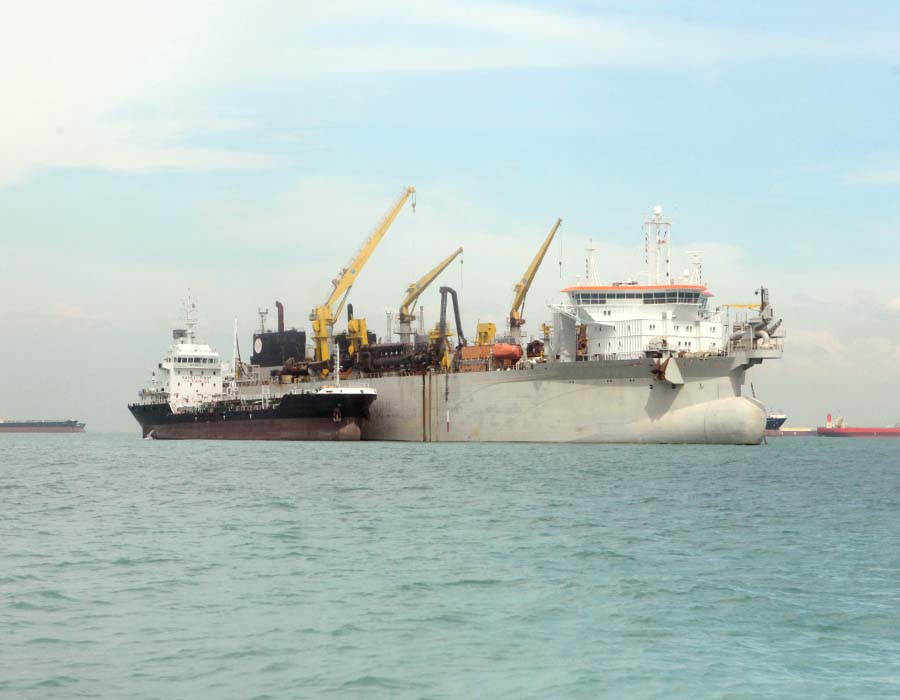
Singapore bunkering operation

The sharp fall in prices of crude oil from Friday till Monday – which resulted in a significant drop in bunker prices at Singapore port – might not be leaving an indelible mark on most physical players operating within the republic’s physical bunker sphere, learned Manifold Times.

The Singapore bunker publication checked with players along each node of the marine fuels supply chain of how the earlier fall in oil prices affected their respective sector.

In short, fuel buyers for shipping firms welcomed the development due to lower operating costs while bunker traders said the cheaper oil now meant customers’ credit lines are now being reduced allowing for increased utilisation.

Bunker suppliers, thought by others to be most exposed to the historical fall in crude oil prices, offered a mixed response with most saying the risk has been somewhat mitigated.

Non-physical bunker players

One Bunker Manager noted the fall in bunker prices may not be producing much of an adverse effect for some shipowners.

“There is not much of a difference because we are mainly on term contracts. The drop has given us the opportunity to go out to look for more term contracts at better prices, and possibly over a longer-term period. So, for us it is just a normal thing as we do not see this as a huge drive to buy more or less bunkers,” he said.

Shipowners who purchase fuel from the spot market will most likely benefit from the fall in bunker prices, but under what circumstances, he notes.

“The question is if you buy now, how much more will you be able to buy as there will be other factors and constraints which may limit the amount of physical hedge available for each vessel. The other constraint may include the availability, port stay time, tank size, draft, cargo volume, credit, etc,” he added.

An international Bunker Trader believed the price drop to be a positive development for the marine fuels trading sector.

“It is a positive thing as the credit lines can now be utilised to purchase more bunkers as less cash is required for transactions,” he explained.

“The operating costs for shipowners will be lower; our customers isolated from that should have less costs for ships to run.

“The bunker suppliers who have neither hedged their inventory nor done risk management will be in trouble. But if the position was balanced then it should be no problem.”

A back-to-back trader focusing on marine fuel purchases for a foreign market says unprepared players in the physical bunker market could be taking a “very hard fall” during this period.

“It might be a problem for unprepared players with storage because some don’t really hedge all the cargo and if they can’t sell in time they will be holding onto high cargo prices.

“Prices are down almost USD 150 pmt on the prompt and futures markets, so assuming you have paid up USD 460 last month and now you can only sell USD 300 you are going to bleed. Players who bought cargo last week before the plunge in prices will be kicking themselves.”

An oil major source believes this period could see certain bunker suppliers exiting the market.

“A lot depends on their position last week, but in general I feel we might see another batch of companies falling,” said the source.

“Flat price punters, suppliers long on trades or overcommitted on expensive purchases, or operating barges with high cost will suffer.

“Before the sharp decline, we noticed certain bunkering firms have been extremely uncompetitive possibility due to them waiting out the ‘low’ flat price as their bunker fleet sits idle.

“The premiums actually edged up slightly during the last couple of trading sessions but the upside has been limited due to VLSFO and LSMGO sentiments remaining extremely bearish.”

Singapore physical bunker suppliers

Interestingly, physical players at the republic offered a mixed view of how their sector will be affected by the price drop.

“Most bunker suppliers will be affected by the development; we have fixed cost such as wages and assets including vessels to cover under P&L,” said a management level executive of a local bunker supplier.

“The price drop will cause us to turnaround more as we will need more volume to cover the cost. However, at this time due to the coronavirus demand has also slowed down so this will be a challenge.

“Moving forward, we will try to engage more customers and form more alliances with other physical suppliers to work together in order to maintain cost and volume to provide better packages for customers so everybody can move forward together.”

A Singapore bunker supplier whose business predominantly focuses on providing barging services for oil majors says his operations were least affected by the historical fall in oil prices.

“Fortunately, we were not affected at all because in our business model we operate barges and conduct bunker deliveries on behalf of oil majors so we do not have exposure to oil price fluctuations,” said the owner.

“There is no impact [on our company] and therefore we are doing nothing particularly about it.”

Another bunker supplier which operates physical storage was keen to dispel market sentiments that all such physical players will encounter huge losses due to the fall in crude oil prices.

“In the past, whenever there are big swings in prices we did find one or two players collapsing due to being caught holding the wrong position. However, these days the bunkering sector is more conservative when it comes to these type of situations,” explained the Director.

“Most people think we will be conducting long term trades in this kind of market but that is not true due to availability of product, in fact nowadays there is less speculation and many firms face much lesser risk of being adversely affected by big swings in prices.

“Besides, the cheaper oil prices bring about less financing cost for the same amount of credit. We still collect the same amount of money in every month from what we charter out and combined with most of trades being conducted back-to-back, we do not expect margins to be significantly different.”

A management executive at another bunker supply firm, meanwhile, highlights physical players which locked in cargoes in the previous two weeks may experience losses for the short term.

“However, these physical bunker players in totality already made loads of money during November and December 2019; overall, the margins may not be as great as before but if this continues they will start to lose money,” he said.

“But then again, cargo prices have also caught up substantially. Hence, losses might be not as great as suggested by others.”


Photo credit: Manifold Times
Published: 12 March, 2020

Continue Reading

Mass Flowmeter

Hong Kong backs MFM adoption with voluntary scheme to boost bunkering competitiveness

Hong Kong’s Marine Department launched the Quality Bunker Operator Scheme to encourage bunker operators to install and use mass flow meter systems on their bunker vessels.

Admin

Published

on

By

RESIZED EH dual mfm setup

Hong Kong’s Marine Department (MD) on Wednesday (3 June) launched the Quality Bunker Operator Scheme to encourage bunker operators to install and use mass flow meter systems (MFM systems) on their bunker vessels.

MD said the scheme aims to enhance Hong Kong’s bunkering service quality and the competitiveness of Hong Kong ports, thereby further consolidating Hong Kong’s position as an international maritime centre and a major bunkering port.

Under the Scheme, bunker operators of traditional maritime fuel and biodiesel that install and use MFM systems on their bunker vessels, with the MFM systems inspected and certified by an accredited body in accordance with the International Organization for Standardization’s ISO 22192 Standard or equivalent requirements, can apply to the MD for inclusion in the scheme’s “List of Quality Bunker Vessels”, provided they meet the relevant technical and operational requirements. 

Details of the bunker vessels successfully included in the List will be published on a dedicated page on the MD’s website for reference by shipping companies and relevant stakeholders.

Participation in the Scheme is voluntary. In addition to receiving recognition from the MD, participating bunker operators will benefit from enhanced corporate image and competitiveness through the adoption of MFM systems, thereby boosting customers’ confidence and helping to create new business opportunities.

 A spokesman for the MD, said: “As an international maritime centre supported by our country, Hong Kong has a strategic location adjacent to major international fairways. Coupled with years of development in marine fuel bunkering, Hong Kong possesses rich experience and talent in the field. For many years, Hong Kong has consistently ranked as the seventh-largest bunkering port globally, the second-largest in our country, and the largest in the Greater Bay Area, providing reliable and competitive fuel bunkering services to ocean-going vessels from around the world. 

“As the international shipping industry has an increasing demand for accuracy and transparency in bunkering services, service quality and measurement precision in bunkering operations have become important indicators of a bunkering port’s competitiveness. The Scheme will enhance bunkering accuracy and transparency, further enhancing the quality of Hong Kong’s bunkering services.

The spokesman added that comprehensive port services are one of Hong Kong’s key advantages as an international maritime centre.

“We will also mandate the use of MFM systems on all methanol bunker vessels this year to ensure that Hong Kong continues to provide high-quality bunkering services in the era of green maritime fuels.” 

Note: The application form for the Scheme can be found on the MD’s website. Interested bunker operators can download the application form from the website or contact the MD’s Green Maritime Fuel Team via email ([email protected]) for details.


Photo credit: Manifold Times
Published: 4 June, 2026

Continue Reading

Alternative Fuels

MPA and MSC ink MoU to support adoption of alternative bunker fuels

MPA and MSC will explore new routes and services to strengthen connectivity, support the adoption of alternative marine fuels such as bio-LNG, and advance technologies to improve vessel energy efficiency.

Admin

Published

on

By

MPA and MSC ink MoU to support adoption of alternative bunker fuels

The Maritime and Port Authority of Singapore (MPA) on Wednesday (3 June) said it signed a Memorandum of Understanding (MoU) with MSC Mediterranean Shipping Company to strengthen collaboration in maritime decarbonisation, digitalisation, innovation, and manpower development. 

The MoU was signed on 25 May 2026 by Mr Ang Wee Keong, Chief Executive of MPA, and Mr Soren Toft, Chief Executive Officer of MSC.

The MoU underscores the shared commitment of MPA and MSC to foster a sustainable, digital, and future-ready maritime sector, while enhancing MSC’s operational and business activities in Singapore. This year also marks the 30th anniversary of MSC establishing its Asia Regional Office and local office in Singapore.

Under the MoU, MPA and MSC will explore new routes and services to strengthen connectivity, support the adoption of alternative marine fuels such as bio-LNG, and advance technologies to improve vessel energy efficiency and operational performance.

MPA and MSC will also collaborate on maritime digitalisation initiatives to improve operational efficiency, including streamlining vessel arrivals and port operations. 

On manpower development, MSC will support internship and scholarship opportunities through Singapore Maritime Foundation’s Maritime Outreach Network (MaritimeONE) platform, an industry-led tripartite partnership comprising industry, government and institutes of higher learning that aims to raise awareness of the maritime industry and attract quality talent into the maritime sector.

Mr Ang Wee Keong, Chief Executive of MPA, said: “This partnership reflects the strong collaboration between MPA and MSC in driving sustainability and digitalisation in the maritime sector. By working together on decarbonisation, operational efficiency and talent development, we aim to strengthen Maritime Singapore’s position as a trusted and future-ready global maritime hub.”

Mr Soren Toft, Chief Executive Officer of MSC, said: “Singapore is a strategically important hub for MSC and a key gateway to the broader Asia region. As we mark 30 years in Singapore, this MOU reinforces our long-term commitment to strengthening our presence here. MSC and Singapore are closely aligned on the priorities shaping the future of global shipping, and we look forward to deepening this partnership to drive the continued growth and resilience of the maritime industry.”


Photo credit: Maritime and Port Authority of Singapore
Published: 4 June, 2026

Continue Reading

Emissions reporting

StormGeo and OceanScore link emissions data, compliance workflows

Cooperation combines StormGeo’s expertise in operational vessel and emissions data with OceanScore’s expertise in emissions compliance workflows across EU ETS, FuelEU Maritime and UK ETS requirements.

Admin

Published

on

By

StormGeo and OceanScore link emissions data, compliance workflows

Weather intelligence and decision support solutions provider StormGeo and Hamburg-based technology platform OceanScore on Wednesday (3 June) said they have deepened their ongoing cooperation through the signing of a collaboration agreement during Posidonia 2026 in Athens on 2 June.

The cooperation combines StormGeo’s expertise in operational vessel and emissions data with OceanScore’s expertise in emissions compliance workflows across EU ETS, FuelEU Maritime and upcoming UK ETS requirements.

Together, the companies aim to help shipping companies seamlessly navigate increasing regulatory complexity more efficiently — from emissions reporting and data validation to compliance exposure management, pooling and financial settlement.

As emissions regulation becomes an increasingly important part of commercial shipping operations, the need for reliable operational data and streamlined compliance processes continues to grow. The cooperation between StormGeo and OceanScore is designed to support shipping companies with more connected, transparent and actionable processes across operational and commercial teams.

“From the outside, companies like StormGeo and OceanScore may sometimes be perceived as competitors because both operate around emissions and compliance workflows,” said Albrecht Grell, Managing Director at OceanScore. 

“But in reality, the industry increasingly needs both perspectives working together: trusted operational emissions data on one side and commercial compliance execution on the other. Our cooperation reflects that shipping companies are no longer looking for isolated solutions — they need connected processes, automated across different systems and reliable decision-making throughout the full compliance chain.”

By connecting validated operational emissions data with commercial compliance management, the cooperation supports workflows across:

  • emissions reporting and validation 
  • compliance management across EU ETS, FuelEU Maritime and upcoming UK ETS requirements
  • exposure visibility and cost transparency
  • pooling, settlement and financial processes 

The cooperation also aims to improve commercial transparency and coordination across operational and commercial stakeholders.

“StormGeo plays a central role in helping shipping companies turn operational vessel and emissions data into trusted, decision-ready insights,” said Espen Martinsen, Chief Commercial Officer at StormGeo. 

“As emissions regulations become more complex, this data is essential for transparent and efficient compliance management. By working with OceanScore, we can help customers connect StormGeo’s validated operational data with commercial compliance processes, creating a more integrated and practical approach to emissions management.”

The signing ceremony took place at the StormGeo booth during Posidonia 2026 in Athens and was attended by representatives from both companies.

Both companies expect the cooperation to continue evolving alongside upcoming regulatory developments, including FuelEU Maritime, EU ETS, the upcoming UK ETS and future emissions-related frameworks affecting global shipping.


Photo credit: StormGeo
Published: 4 June, 2026

Continue Reading

Trending